

Why AI creates economic value that GDP fails to measure
Download The Business Of podcast on your favourite podcast platform.
UNSW Business School Professor Kevin Fox explains why household AI use hides economic value from GDP and how organisations can better capture AI-related value
AI is meant to lift productivity and boost growth. Businesses are automating workflows, investors are pouring bucketloads of money into AI and technology company shares, while data centres are being built at an impressive scale and speed around the globe.
In fact, the investment in these data centres exceeds what many countries spend on infrastructure in a whole year, according to UNSW Business School Professor of Economics, Kevin Fox, Director of the UNSW Centre for Applied Economic Research and a member of the Leadership Executive at the UK Economic Statistics Centre of Excellence.
However, official productivity statistics remain relatively static. For example, Australian market sector multifactor productivity fell 0.5% in 2024-25, after a 0.1% rise in 2023-24, and market sector labour productivity fell 0.2%, according to the Australian Bureau of Statistics. So how is AI impacting productivity and the broader economy?
The answer lies partly in how economists measure growth, says Prof. Fox, who was recently interviewed by Professor of Practice Fahim Khondaker for The Business Of, a UNSW Business School podcast. Prof. Fox spoke about the impact of AI on the economy, the limits of GDP and what businesses must do to turn AI into profit.
What we know about jobs, productivity and economic growth
Employment is one of the main concerns when AI is discussed. So far, Prof. Fox says the evidence shows that AI is augmenting jobs, rather than ending them.
"With any major technological change, like AI, a general-purpose technology coming in, we do get a bit of reorganisation of the workforce, but we also have new jobs emerging,” he said. “So we're not suffering from mass unemployment at the moment. What's happening, though, is that certain tasks within occupations are being done by AI. So there's automation happening there on very routine cognitive tasks."
Some roles show productivity gains, but the data for the whole economy does not yet reflect them. A slowdown in hiring of junior staff began around 2022, Prof. Fox says, so it is unclear whether AI or the shake-out after the pandemic explains it. He also noted that AI can be applied in about 88% of occupations in advanced economies (although not all workers can or do use it to its full capacity).
Learn more: How AI is changing work and boosting economic productivity
"The big part of the picture here is invisible,” said Prof. Fox. “Households are using AI for all sorts of things, including how to engage with the government about, say, taxes, getting financial advice, cooking recipes, choosing running shoes, general advice about health. These activities, which they might have engaged with a person on in the past, they're not doing that now. They're not paying for the services as they may have done in the past. So that activity is disappearing from GDP."
He gave the example of photography, which once required a camera, film, and development, and a letter required an envelope, paper, and a stamp for delivery. However, technology has transformed this process (and removed many of the associated costs). Now, Prof. Fox said people send texts and emails at a marginal cost of zero and take more photographs than before – and the activity that GDP once measured has gone from the accounts. Households now use AI agents at no to little cost to complete tasks they once hired people to do.
Are economic frameworks still fit for purpose in the world of AI?
Economists work with frameworks rather than models, said Prof. Fox. The main one is the United Nations System of National Accounts, which countries adopt to measure economic activity and which includes GDP. He wants that framework to capture what happens inside the household: "If we want to understand what's happening with productivity in the economy, it would be sensible to capture what's going on in the household, the household production,” he said.
“So it would be advisable to try and do a better job of measuring the impact of the digital economy, the spread of AI, on that. Otherwise, we're just seeing stuff exiting our main measure of economic activity, Gross Domestic Product (GDP), without taking into account the huge boom in household activity."
"Any company that produces a product that could harm the public needs to disclose what that harm is"
KEVIN FOX
Household production has been excluded from GDP for a reason. In Prof. Fox's words, "Unfortunately, it's not that easy. The problem with household production is complex, which is why it typically hasn't been included in GDP,” he observed. “The reason it hasn't been there is that it's very difficult to measure. National statistical offices have made a crack at this, so we want to do a better job of measuring it."
A lot of the debate about AI is not yet informed by data, says Prof. Fox, but this will change. The Australian Bureau of Statistics, for example, plans to learn more about firms through its latest Business Characteristics Survey.
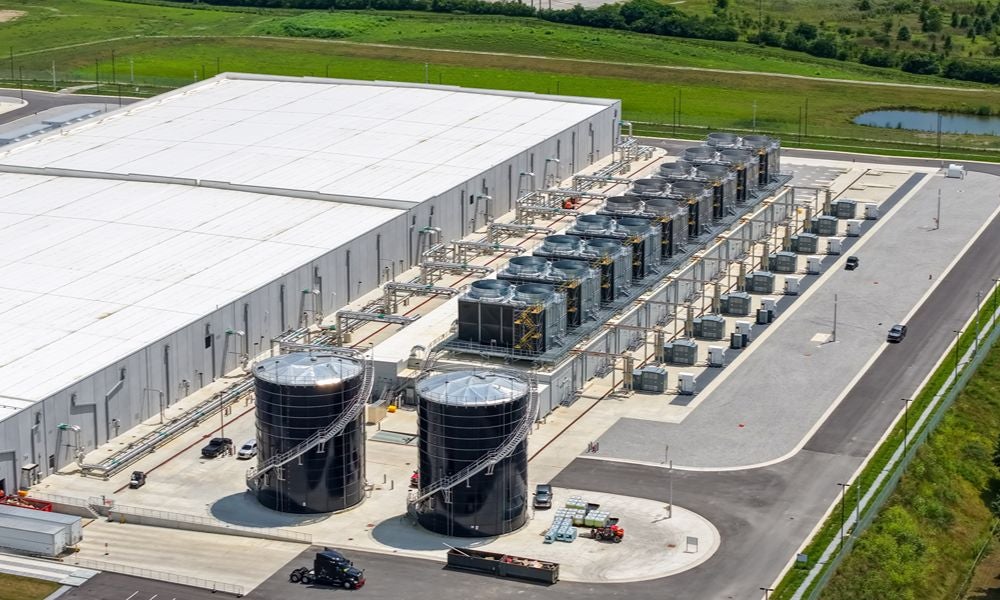
Data can inform policy on AI use, legislation to protect workers and protection of the environment, Prof. Fox affirmed. Governments in many countries also want to lead on AI adoption (including by approving data centres), yet no proper accounts exist of the water and energy those centres use or could use. Many estimates come from the industry itself, and Prof. Fox was sceptical about this kind of self-reporting.
"For example, in Sydney, the industry says that by 2030, about 2% of the city's water usage will go to data centres,” he said. “Independent assessments say 25% of usual Sydney water consumption will go to data centres. This is a problem if it's 25%. If we have a drought, it will have a material impact on people's wellbeing."
How to boost profitability using AI
Firms often confuse productivity with profitability, said Prof. Fox. The Australian Bureau of Statistics defines productivity as output relative to input. AI investment adds to the capital stock, through data centres and the knowledge built by research, and productivity growth follows only if output rises faster than inputs. Some observers see an uptick in the United States, said Prof. Fox, but other factors cloud the picture – including data centre construction on a scale that exceeds what many countries spend on infrastructure in a year.
For guidance on profit, Prof. Fox turned to history. When personal computers entered workplaces from the 1970s to the mid-1980s, substantial investment followed, but productivity growth lagged. In 1987, economist Robert Solow observed that the computer age was visible everywhere except in the productivity statistics. Productivity growth in industrialised countries took off around the mid-1990s, and Prof. Fox said the most popular explanation is that workplaces reorganised around the technology.
The same transformation may now apply to AI. "Just buying a personal computer, putting it on a desk, saying, 'Well, now we've got a computer, productivity is going to go up.' That didn't really happen. That doesn't work. You need to rethink how you can do business,” he said.
Learn more: Leaders: Rethink your workflows before you add AI into the mix
"So, if people are having routine cognitive tasks taken out of their occupation, what else could they be doing? How could the workplace be reorganised? What are the opportunities in opening up that extra time for workers? What does that give the workplace? Does it mean you just cut your costs, or does it mean you can expand into different areas?"
Prof. Fox proposed this answer: "Just do things differently, and the real benefits (the productivity that'll lead to profitability) will be in working out how to better organise the workplace and jobs, so that you are taking full advantage of the new technology."
Where AI is going to take the economy and society
Prof. Fox had doubts that the free economy would sort out the transition smoothly on its own. He expects adjustments in the labour market and asked whether so many people will be needed for coding when AI is so good at it, although safety nets that might be in place may need to be extended. His worry is that technology companies regulate themselves, but others outside the company cannot see what they have access to.
"Any company that produces a product that could harm the public needs to disclose what that harm is,” said Prof. Fox. “We can think about tobacco. For many years, the tobacco companies tried to deny that their products could cause harm. We don't want companies behaving like that."
However, Prof. Fox is, overall, optimistic about the technology itself: "I believe it's a great new technology. It presents us with many opportunities. It takes away routine cognitive tasks from us, things that we really don't want to do," he said.
Learn more: Who pays for Australia’s data centre boom – and who benefits?
Superintelligence would need to arrive before there is reason to worry, and Prof. Fox said that point may be a way off. Job transitions will still happen, however, and this will cause difficulty for the people affected. "People are going to feel justifiably threatened by some of the aspects of AI, and that's a job for the managers to see how they're going to respond to that,” he said. “Are they going to say, 'Well, that's just tough. We don't need so many workers anymore'? Or are they going to say, 'We have opportunities now to take our business in different directions'?
"I think there will be some productivity growth coming from it. It will eventually show up in the statistics, so this will be good in the long run,” said Prof. Fox. “Productivity growth means we're getting more output for the same amount of inputs, and that makes us better off. There will be some redistribution issues, and not everyone will benefit equally; there's a role for policymakers in ensuring that some of the gains from that are shared across the economy."