

The human edge: why investing in people is your best AI strategy
Download The Business Of podcast on your favourite podcast platform.
Professor Toby Walsh warns that AI workforce disruption has arrived, and business leaders who fail to invest in their people risk losing ground to faster-moving competitors
Many speculate that the tech sector is the canary in the coalmine of AI-induced job losses (aka, the “SaaSpocalypse”), with mass layoffs, hiring freezes and a shift to smaller AI-driven teams. In Australia, Atlassian, Block Inc and Salesforce are among the companies that are undergoing major restructures, with a focus on AI taking on more work across their organisations.
For business leaders, the question is no longer whether AI will reshape the workforce. It is whether they are moving fast enough to take advantage of it, according to UNSW Sydney Scientia Professor Toby Walsh, Chief Scientist at the UNSW AI Institute. He argues that the organisations positioned to benefit are those that resist treating AI as a cost-cutting lever and instead invest in the people who understand the business best.
"AI is a wonderful technology, but you're the best people to solve your business problems," Prof. Walsh told Dr Juliet Bourke, Adjunct Professor in the School of Management and Governance at UNSW Business School for The Business Of, a UNSW Business School podcast.
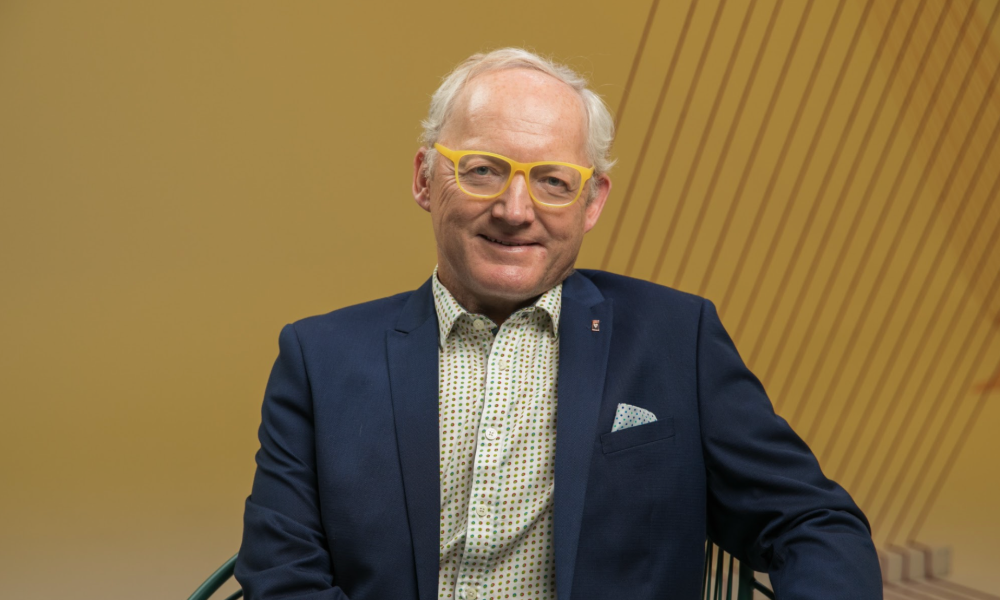
"I always say to people, there's no AI problem, there's a business problem, and AI might be a tool that helps you solve that business problem. And who understands what the business problems are? Well, it's your employees who understand exactly where the pain and pressure are and where the opportunity for innovation is in your business,” he said.
“So you need to empower those people, give them the AI tools so that they can go off and make your business a better business."
Is big tech the canary in the coal mine?
The upheaval in the tech sector poses a genuine structural challenge, particularly for large legacy businesses that lack the agility of companies built from the ground up on AI-native tools. Small companies equipped with agentic tools, for example, may no longer need to hire a dedicated marketing person – whose role could be taken on by a marketing agent that can automate campaign processes.
"I think it is going to challenge those larger businesses, but on the other hand, you have the data, and you have the IT expertise. That is going to mean that, if you put your mind to it, I think artificial intelligence is going to be as transformative for your business as it is for these new startups,” he observed.
Learn more: How AI is changing work and boosting economic productivity
However, not every redundancy announcement is a straightforward story about AI-induced downsizing. Prof. Walsh identified what he called "AI washing": companies with poor management records using AI investment narratives to justify cost-cutting, rather than acknowledging underlying operational failures.
"Rather than say that ‘we've been poorly managed,’ which doesn't do much to your share price, they've been saying, ‘well, we're investing in AI,’ and then your share price goes up," he explained. "So, the CEO looks good if you say it's AI and you're making 10% layoffs of your staff, as opposed to admitting, ‘well, actually, it was my fault."
What tasks is AI already doing, and where?
The first wave of AI disruption has already affected processes where large language models (LLMs) excel: customer service, marketing, and any task involving the generation or synthesis of language. The next wave is agentic AI, according to Prof. Walsh. Rather than waiting to answer questions, an agentic system is tasked with a job, breaks it into subtasks and executes each step through to completion.
“The most valuable thing that a business has is people, at the end of the day, and it should be investing in those people”
TOBY WALSH
Prof. Walsh gave the example of how agentic AI could assist with staff onboarding: registering a new employee with finance, issuing a security card, and completing health and safety requirements. "An agent can go through all those steps and seamlessly, hopefully, onboard a new person," he said. "That's good news for the business. Perhaps not such good news if you're someone who works in HR, because a big chunk of what you do is now being done by one of these AI agents."
Are entry-level jobs the first to disappear?
The fallout from AI in the workplace is impacting people differently, depending on their career stage. Prof. Walsh cited data from the United Kingdom and the United States showing a 30% decline in graduate-level job advertisements, a trend he said was likely mirrored in Australia. The underlying reason for this is that the tasks that define early-career work are precisely those that AI currently handles well.
The longer-term problem goes beyond the immediate employment market. Most organisational structures are pyramids: many people enter at the bottom and relatively few rise to become managers and senior leaders. If entry-level positions are reduced, the pipeline for future leadership also narrows.
Learn more: Why the world’s banks are worried about Anthropic’s latest AI model
"When you become a first-year lawyer, you spend a lot of time studying the nuts and bolts of contracts, so you become an expert in contract law," Prof. Walsh said. "Maybe we can get AI now to write most of those contracts. They're quite formulaic, and AI is pretty good at doing those sorts of formulaic things. But how do you ever learn about contract law if you haven't done the 1000, 10,000 hours – whatever it is – that's required to become an expert?
“Businesses are going to have to wake up to the idea that, yes, in the short term, maybe a lot of this stuff now is being done by generative AI for you. But where is that going to leave your business? The most valuable thing that a business has is people, at the end of the day, and it should be investing in those people. Maybe you're going to have to spend money on people doing things that aren't strictly necessary, because otherwise those people aren't going to have the skills you need in the future."
What skills will matter most?
For Prof. Walsh, the question of where humans retain the edge over machines has a clear answer in the distinctly human capabilities that AI will never bring to the table.
“Those are the things that we should be investing in. Those are the things that distinguish us from the machines. Those are things that, however capable, however smart the machines become, humans are always going to have the edge,” he said. “Those are the things that, certainly, I highly advise people: if you want to be investing in yourself or your employees, those are the sorts of skills that are going to be ever more valuable, ever more important."
Learn more: Empire of AI: what OpenAI means for global governance and ethics
Prof. Walsh referred to the capabilities that early-career experience builds (alongside technical knowledge), such as judgement, communication, empathy and negotiation. For professionals already 5-10 years into their careers, the challenge is different. While a basic grounding in professional practice has already been established, many mid-career professionals lack confidence in navigating the pace of technological change.
To emphasise this point, Prof. Walsh cited research which showed that AI tools amplify pre-existing differences in capability. For example, a highly competent programmer using AI coding tools can write code at double or triple their normal speed, while a less capable programmer may actually slow down, spending more time debugging AI-generated errors than they would have spent writing the code themselves. AI rewards expertise; it does not substitute for it.
The problem with AI-generated content
While AI has an increasingly useful range of applications, Prof. Walsh highlighted certain downsides and issued a plea to podcast listeners: "Please, anyone listening, don't write your LinkedIn posts with AI,” he said.
“I can't stand reading AI, because it has a particular voice. You can recognise the voice. It has some style tics that you really easily recognise. It's not just the em dash, it's the tricolon. It always uses threes. That's an old rhetorical trick. It's always using contrastive phrasing. It's not this, it's that. It becomes very clichéd. And once you know, I've spent my time, unfortunately, reading too much AI-generated content, and it just so annoys me.
“If you can't be bothered to tell me what you think, I'm not interested in what AI thinks. I'm interested in what you think, the human perspective, a novel perspective. Because this is how the AI tools work: they're giving you a very competent, average, middle-of-the-road answer. They've been trained to be that way. If I want to read an interesting point on LinkedIn and an interesting post, I want someone who's going to take an interesting angle, not something that's going to be very average."
There is also a broader cognitive risk for AI users. Prof. Walsh cited evidence that IQ scores, which rose steadily for most of the twentieth century, have begun falling in countries where conscription provides a reliable population-wide measure. Attention spans are declining by comparable measures. "There's evidence that unless you put the effort in, you need the grit, you don't learn," he said. "Your brain is a muscle. And if you haven't put the effort in, if you outsource too much to the tools, then sure, you get those things done, but you never actually stretch yourself. You never actually learn."
How to manage the risks of AI in the workplace
A reality many business leaders have been slow to confront is what Prof. Walsh called "shadow AI": employees using consumer-grade tools, including the free versions of platforms such as ChatGPT, independently of any corporate IT infrastructure or policy. The risk is real. Data entered into a free consumer AI platform may be used to train future versions of the model, potentially leaving the organisation without oversight of sensitive client information or commercial strategies.
"There's evidence that unless you put the effort in, you need the grit, you don't learn"
TOBY WALSH
Prof. Walsh argued that the answer is not prohibition but governance. "You need governance, and you need to have a contract with a company so you can say what's happening to the data. You can actually say it's been sandboxed, it's put in a safe place, so that you can turn to all your clients and say to them, yes, your data hasn't left the building," he said.
"We've actually been careful guardians of all that. But equally, it's not just a case of stopping that, issuing a proclamation that your business needs to stop, that people need to stop doing that. It's to wake up to why people are doing that. There's obviously a demand. You need to satisfy the demand, because people are finding the tools useful. So you've got to find a way that people can use the tools and not expose you to those issues of privacy and so on."
Responsible data stewardship also builds commercial trust. Prof. Walsh contrasted Meta with Apple: both are data-intensive businesses, but Apple's resistance to government demands to unlock encrypted devices has generated loyalty that Meta's model has not. Being seen to handle customer data with care is a competitive asset, not just a compliance obligation.
Could AI give us a shorter working week?
Prof. Walsh also discussed an important idea that tends to get overlooked in the AI-workforce disruption debate: that the productivity gains from AI could be distributed as time, rather than capturing them as profit or redirecting them into layoffs. The weekend, he noted, was an invention of the Industrial Revolution, a social dividend from the efficiency gains of mechanisation.

Similarly, AI is particularly good at what Prof. Walsh said is the “four Ds: the dull, the difficult, the dirty and the dangerous," he said. "You can see this as an opportunity. You can see a 10-15% efficiency improvement possibility here. You've got a choice: you could say, ‘okay, we're going to cut our workforce by 10%,’ which is an entirely reasonable, rational economic return from that.
“Or you can say, ‘Well, okay, we've got 10% of these people's time freed up. We can now put those people to improving our product, improving our service, talking to our customers and understanding better.’ I think if you want to be a business in the long-term, probably the second is the better strategy."
5 key takeaways: what business leaders should do about AI
1. Leadership comes first. AI adoption stalls when left to individual initiative. Leaders who integrate AI tools into their own work, talk openly about what they are learning and make AI capability a visible organisational value will drive genuine adoption.
2. AI literacy across the organisation matters more than a top-down technology programme. The employees closest to the work understand the pain points and opportunities. Giving them tools and training to identify and act on AI opportunities produces better outcomes than an IT-driven rollout designed without their input.
3. Governance must precede broad deployment. Any organisation without a clear policy on data sovereignty and platform use is already exposed. Enterprise agreements that sandbox data and establish accountability are the answer, not bans that push usage further underground.
4. Protecting the human skills AI cannot replicate is the investment with the longest payoff. Judgement, empathy, negotiation, and communication will determine which people and organisations remain indispensable as technology develops. That means preserving entry-level roles through which those skills are developed, even when short-term economics argue against it.
5. Avoid treating AI deployment as an all-or-nothing commitment. Not all AI projects succeed, and leaders who pilot tools in low-risk areas first, remain agile when projects fail and build confidence incrementally will make better long-term decisions than those who move straight to mission-critical applications, before the technology has been tested in their specific context.