

Five important ways to reduce Australia’s supply chain risks
A new UNSW Canberra report warns that Australian businesses are more exposed to supply chain disruption than most of their leaders realise
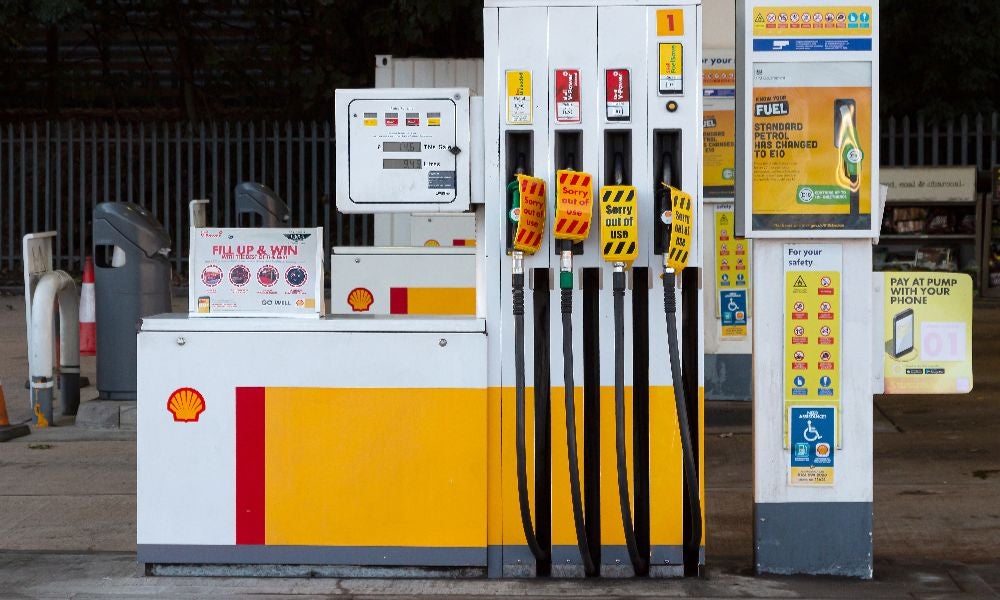
The scenes at petrol stations across Australia in recent weeks have been a reminder of something most businesses prefer not to think about. As global oil markets tightened in response to the conflict in Iran, fuel supplies came under pressure, and public confidence in Australia’s ability to keep essential goods flowing took a significant hit as demand temporarily exceeded available fuel supplies. But fuel is only the most visible pressure point. A sustained disruption to fuel supply chains has significant downstream and other network effects.
For example, transport and logistics networks stall, slowing the movement of food, medicine and manufacturing inputs across the country. Freight costs spike, compressing margins for businesses already operating under tight conditions. Supermarket shelves empty as just-in-time replenishment systems, which allow for almost no stock buffer, fail due to struggling diesel-powered truck networks. Fuel shortages can be the first domino in a sequence that most organisations have never stress-tested, and few are equipped to manage.
That is precisely the vulnerability a new policy report from UNSW Canberra has urged Australia to confront. That report, produced following a roundtable of senior leaders from defence, government, industry and academia convened as part of UNSW Canberra’s World in Transition initiative, found that Australia’s supply chains remain dangerously exposed across fuel, pharmaceuticals, digital infrastructure and defence inputs. Its findings carry direct implications not just for policymakers but for every business leader whose operations depend on inputs they cannot fully see, let alone control.
Why Australia’s supply chains remain dangerously exposed
Australia’s structural position in the global economy creates a particular form of vulnerability. The country exports raw materials and imports finished goods, relies on a narrow list of trade partners, and lacks meaningful sovereign capacity in critical inputs such as pharmaceuticals, semiconductors and energy. According to the roundtable report, Australia’s supply chains are “long, opaque, and heavily import-dependent”, and there is no comprehensive national risk or vulnerability assessment to map the nature of those dependencies.
UNSW Canberra Professor Douglas Guilfoyle, who chaired the roundtable, explained: “One of the clear lessons of the COVID-19 pandemic was how susceptible Australia is to supply chain disruption, and those effects are far-reaching,” he said. “The current queues at fuel stations around the country highlight how fragile public confidence can be in Australia’s ability to maintain the flow of essential goods during crises. As a country, we are reliant on international suppliers for critical goods, such as fuel and pharmaceuticals. This makes us potentially vulnerable to disruptions of supply chains, either at the hands of foreign powers or market forces during times of uncertainty, ultimately limiting Australia’s capacity for strategic autonomy.”

The pandemic was an illustration of how market logic diverges from national interest in moments of crisis: global shipping companies maximised margins precisely when countries most needed reliable access to goods. Many hospitals and government agencies discovered they had no visibility of their upstream suppliers at all. The roundtable experts concluded that this problem is not primarily technological. Rather, they agreed that barriers to change are cultural and organisational, and the funding to build the workforce capable of making a practical difference has not materialised.
The innovation gap: what Australia’s “missing middle” reveals
One of the consistent themes to emerge from the roundtable was Australia’s failure to develop a functioning innovation ecosystem that connects research institutions, small and medium-sized enterprises (SMEs), large prime contractors and government as a coherent whole. The report described an “economic missing middle,” in which SMEs lack the scale, capital and policy support to bridge the gap between an idea and a viable sovereign capability.
The dependency of critical sectors on foreign capital, processing, and data compounds this problem. It limits Australian SMEs' ability to scale up, particularly in digital and emerging technology industries, where the risk appetite among both investors and the government is too low to sustain meaningful development. The roundtable report found that Australia’s current policy settings are insufficient to sustain SMEs, and that the central problem is the lack of political will to facilitate structural change.
Subscribe to BusinessThink for the latest research, analysis and insights from UNSW Business School
The report pointed to Ukraine as an unconventional case study in rapid innovation: decentralised drone acquisition by unit commanders, working directly alongside companies, produced a feedback cycle that accelerated development far beyond what centralised procurement could have achieved. The takeaway for peacetime application is that innovation tends to work better from the bottom up.
Experts also cited the biotech sector clustered around major universities in the United Kingdom as an example of what government-supported co-location of industry and research can produce. Australia has the research institutions and innovative firms; what it has consistently lacked is the enabling architecture to connect them.
The digital dependency problem businesses cannot afford to ignore
The roundtable also highlighted an emerging dimension of supply chain vulnerability that most Australian businesses have not fully reckoned with: digital dependency. Artificial intelligence has seen widespread adoption across many industry sectors, but current integration practices risk entrenching reliance on foreign digital platforms in ways that erode sovereign capacity – with organisations even failing to recognise it is happening.
The report observed that a possible foreign monopoly over new technologies, such as AI, raises the risk of foreign control over Australian industries, particularly where Australian investors and companies remain risk-averse about backing foundational technologies. The European Union’s recent moves away from platforms such as Microsoft and Zoom, and towards domestically controlled cloud infrastructure, were cited by roundtable participants as a signal of where the strategic logic of digital sovereignty leads.
Australia, the report concluded, has not yet followed that logic with adequate seriousness. Entrenched foreign dependency in digital infrastructure could compound already fragmented efforts toward sovereign capability in defence and advanced manufacturing.
All of these contribute to increased supply chain risks. Many organisations that believe they have addressed their supply chain risk have not yet mapped their digital supply chains at all: the platforms they rely on, the jurisdictions where their data resides, and the foreign entities that control the infrastructure underpinning their operations.
Australia’s crisis agility is real, but it is not a substitute for preparedness
The roundtable was careful to acknowledge what Australia does well. The country demonstrated extraordinary agility during COVID-19, particularly through large-scale coordination via the National Emergency Management Agency and the rapid mobilisation of industry-government networks. That capacity is real and should not be dismissed. The problem, as Prof. Guilfoyle made clear, is that it has become a substitute for forward planning rather than a complement to it.
“Future crises will not resemble past ones, and the country cannot continue to rely solely on reactive capability,” he said. A degree of what the report termed “COVID amnesia” has set in, and the institutional memory built during the pandemic has not been deliberately preserved. The report recommended using tools such as scenario planning and digital twin technology to stress-test supply chain systems before the next disruption, rather than after.
It also called for the involvement of regulators such as the Australian Competition and Consumer Commission (ACCC) to help with crisis coordination and managing tensions between necessary industry cooperation and anti-competitive conduct.
Learn more: Why does panic buying spread so fast among Australians?
The roundtable experts were clear that preparing for every conceivable scenario would consume a significant amount of national resources. A more practical path is a targeted one: identify the critical goods and services for which transparent, verifiable supply chains are non-negotiable, map the dependencies that create unacceptable national risk, and build coordination mechanisms that allow government and industry to respond before a crisis strikes. That mapping, the report recommended, should be conducted at the government level, with appropriate protections to avoid revealing Australia’s vulnerabilities to potential adversaries.
Five recommendations for the business community
The five recommendations that emerged from the roundtable (summarised below) are framed as calls to government, and rightly so: many of the structural problems identified are beyond the reach of individual businesses.
- Establish a National Supply Chain Risk and Resilience Assessment, updated annually.
- Create a permanent national supply chain coordination mechanism linking government, industry, and regulators.
- Develop a targeted industrial strategy for critical capabilities, including digital infrastructure, pharmaceuticals, energy, and defence inputs.
- Strengthen the “missing middle” (SMEs) through better integration and long-term procurement signals.
- Build an effective national resilience narrative and leadership culture that supports bottom-up innovation and shared responsibility.
The recommendation to establish a National Supply Chain Risk and Resilience Assessment points to something businesses can begin doing independently: mapping their upstream dependencies in sufficient depth to identify where a single-point failure would be catastrophic. The recommendation to strengthen SMEs through better integration and long-term procurement signals highlights the commercial opportunity for larger organisations to build domestic supply relationships that reduce exposure to offshore disruption, while contributing to the broader national resilience the roundtable called for.
Prof. Guilfoyle’s summary of the political challenge translates directly into a business one. “Australian governments need to move past short-termism and be able to effectively bring the public on this journey with them, making it clear why sometimes costly changes are necessary,” he said. Boards and senior leadership teams face a dual challenge: the investment required to build supply chain resilience is real; however, the returns are largely invisible until a crisis strikes, and short-term financial logic consistently deprioritises it.
Learn more: Supply chains and COVID-19 stock shortages: five things to know
The roundtable’s final recommendation (to build a national resilience narrative that supports shared responsibility and bottom-up innovation) is the one that asks the most of the business community. Finland was cited as a potential model: a culture in which resilience is understood as a collective obligation rather than a government function. This kind of culture does not emerge solely from policy. It requires organisations at every level to treat supply chain risk as a strategic priority and to make the case internally, to boards, to investors and to customers, that resilience is not a cost to be minimised, but a capability to be built.
Failing to do so, the roundtable warned, risks locking Australia into precisely the precarious strategic position that Prof. Guilfoyle cautioned against: one that restricts options and constrains nimble decision-making when the next crisis arrives. For businesses operating in an era of ongoing geopolitical uncertainty, that is not an abstract national problem. It is an operational risk sitting inside every supply chain that has not yet been addressed.