

How to read the economy when disruption becomes the norm
UNSW Sydney's Richard Holden and AMP's Diana Mousina explore the impact of a more volatile global economy and solutions to long-running productivity challenges
Geopolitical disruption was once treated largely as an occasional shock to the global economy. When AMP Deputy Chief Economist Diana Mousina first joined the financial services company, it barely featured in the economic and market analysis her team conducted.
Today, wars, trade tensions and shifting global spheres of influence are among the forces Ms Mousina must monitor closely, as events in one part of the world increasingly reverberate across markets and economies. Speaking recently at the 2026 AGSM Professional Forum – centred on the theme of “Leading Through Complexity” – she pointed to the growing role geopolitical volatility occupies in her work analysing economic, political and market trends and translating their implications for Australia.
“Every single morning, the first thing I’ll look at is what the US market did overnight,” Ms Mousina told Richard Holden, UNSW Vice Chancellor’s Professor and Chief Societal Economist, during the forum’s keynote conversation. And while the US market remains highly influential in Australia and beyond, it’s just part of an increasingly disruptive and interconnected geopolitical picture – adding complexity to how Australians understand their economy.
“That trend has been rising in the past 10 years, and it’s been quite high in the past two years in particular, because we’ve had these recurrent flare-ups around the world, which have caused big drawdowns in share markets,” Ms Mousina said. “We know that share markets don’t like geopolitical events; they normally tend to fall.”
Photo gallery: the 2026 AGSM Professional Forum
The longer-term effects are more complicated. Ms Mousina’s analysis of 15 major geopolitical events found that equity markets typically fell by about 8% from peak to trough, but were generally more than 10% higher a year later. Some shocks, however, leave a deeper economic mark: Russia’s invasion of Ukraine, for example, contributed to a prolonged surge in global inflation, particularly in energy-dependent Europe.
“I think we can safely assume that geopolitical risk is going to continue to trend up in the next few years, so expect the volatility in share markets to continue,” Ms Mousina said. “We know that the global spheres of influence are changing, so that means that the risk of more flare-ups is certainly going to be there.”
The challenge is therefore not simply predicting the next disruption, but distinguishing short-term market reactions from the forces that will shape economic performance over years or decades.
When sentiment stops predicting spending
The difficulty of reading the economy is not confined to unexpected global events. Some of the indicators economists have traditionally relied on are also becoming harder to interpret and losing their predictive power.
“For example, the consumer sentiment figures in Australia have been at recessionary levels since COVID, but consumer spending over that time has actually fluctuated up and down,” Ms Mousina said. “Consumers tell us that they feel depressed, yet they are still spending, overall, in the past few years – so surveys are not necessarily a great guide to the hard data, which is really what drives investment markets at the end of the day.”
To her, high inflation and eroded purchasing power help explain the deep pessimism: “People’s wages haven’t necessarily kept up with inflation, so they do feel a real-wage decline,” she said.
“Overall income growth isn’t falling relative to inflation anymore, but if you’re in the same job, you might be feeling like you’re not getting a real-wage increase”
DIANA MOUSINA
But here, too, the aggregate figures mask very different experiences. Ms Mousina said overall income growth has been supported by the increase in the superannuation guarantee and a strong labour market, particularly for workers able to secure larger pay rises by changing jobs. Those who have remained in the same role may not have experienced the same gains, helping explain why sentiment remains weak even as broader income and spending data appear more resilient.
“Overall income growth isn’t falling relative to inflation anymore, but if you’re in the same job, you might be feeling like you’re not getting a real-wage increase,” Ms Mousina said.
Housing has added to that sense of falling behind, particularly among younger Australians. National home prices have risen by about 50% since 2020, according to Ms Mousina, pushing homeownership further out of reach even as many existing homeowners and older households remain relatively well placed.
She also argued that more than three decades without a conventional recession had changed expectations about the role government should play when conditions become difficult. “We forget that people have not experienced hard times, really, in Australia; we haven’t really had it tough for a long time, haven’t had a real recession for more than 30 years,” Ms Mousina said, noting that government support shielded Australians from the full effects of the COVID-19 recession.
“People want to continue to be reliant on the government for welfare, for jobs, but expect lower taxes in the process,” she said. “That doesn’t really match up.”
Resilience without growth
Australia has proved better at absorbing economic shocks than generating growth. Households and the financial system have weathered higher interest rates more successfully than many expected, but that resilience can obscure a slower-moving weakness.
“Australia hasn’t really had any productivity growth for the past 10 years, and that’s the best long-term guide to living standards through household disposable income,” Ms Mousina said. “You can’t really have real wage increases without productivity growth over the long term.”
Even so, Australia has considerable financial buffers. Its superannuation pool has grown to about $4.5 trillion, while strong lending standards and households’ willingness to prioritise mortgage repayments have limited the damage from higher interest rates.
“We have a really strong financial system here, and I was the most negative on the Australian economy when we had the rate hikes a few years ago, and even at that time, we saw very little negative impact to households under mortgage stress,” Ms Mousina said. “Even though we’ve had three rate hikes this year, and we think that we may get one or two more, I still think that the consumer comes out okay,” she added. “Australians are very good at paying down their debt.”
Learn more: Can Australia pay off its debt without hurting future generations?
Prof. Holden agreed. “People have been on the whole pretty sensible about, when interest rates came down, putting money into their offset account, and the aggregate data about the health of people’s household balance sheets is pretty encouraging,” he said.
But those buffers cannot substitute for stronger productivity growth. One constraint is Australia’s reliance on personal income tax, which Prof. Holden said can discourage workers from moving into jobs that make better use of their skills.
“We get twice as much of our revenue from income taxes and half as much from value-added taxes as the average OECD country, and I think that has real implications for people being willing to move in order to match themselves to a better job,” he said.
Housing provides another example of how structural settings can weigh on productivity while adding to the financial pressures households feel.
“We look at productivity across the different sectors, and one of the main detractors has been housing construction: it basically takes double the amount of time to build a home as it did 30 years ago, and that’s because of regulation, mostly,” Ms Mousina said. “If you look at the cost of a new home and land package in Sydney, for example, 43% of that is in taxes and regulation, so that’s contributing to the affordability crisis.”
Australia’s financial system may help households absorb periods of disruption. The longer-term challenge is removing the barriers that prevent that resilience from translating into stronger growth.

Where the productivity growth is happening
While Australia searches for ways to revive productivity growth, AI investment is already widening the gap between its economy and the US. “The only reason that the US has had such strong productivity growth is because of AI, and it’s been the outlier compared with most other countries,” Ms Mousina said.
The boom has concentrated US market returns among a small group of technology companies, while spending on chips, computing infrastructure and data centres has become an important driver of economic growth. Despite concerns that valuations may have entered bubble territory, Ms Mousina believes the investment cycle has further to run.
“I’m a buyer, and I think it has more to go; even if we look at the contribution of AI to US GDP growth through the investment perspective, it’s only reached its 2000s peak now, and there’s more investment yet to come,” she said.
Australia’s clearest opportunity may lie in the infrastructure needed to support that growth. Investment in technology and data centres is expected to contribute more to the domestic economy than mining over the next five years, according to Ms Mousina.
Subscribe to BusinessThink for the latest research, analysis and insights from UNSW Business School
But the size of the investment does not necessarily translate into an equivalent contribution to economic growth from data centres. “They need energy, they need water, they’re not very labour intensive, they are very import intensive,” Ms Mousina said. “So yes, they’re important from an investment point of view, but from a growth point of view, they probably won’t add as much growth as we expect them to.”
Following the growth offshore
For Australia’s superannuation funds, the widening gap between domestic and global growth is more than a question of economic performance. It is shaping where they invest the country’s retirement savings.
Super is inherently long-term, allowing funds to look beyond immediate market falls caused by geopolitical events and invest based on earnings growth over decades. Increasingly, those opportunities are found outside Australia.
“In Australia, we have had very flat earnings growth for a number of years. Part of it is to do with tech and AI – we have a small sector of that in terms of our share market index, but globally, you just can’t compete with the returns in the US,” Ms Mousina said. “When you’re looking at earnings growth, it’s still offshore, and I think the budget changes will keep earnings growth more depressed in Australia compared with globally.”
Storyboard: the 2026 AGSM Professional Forum
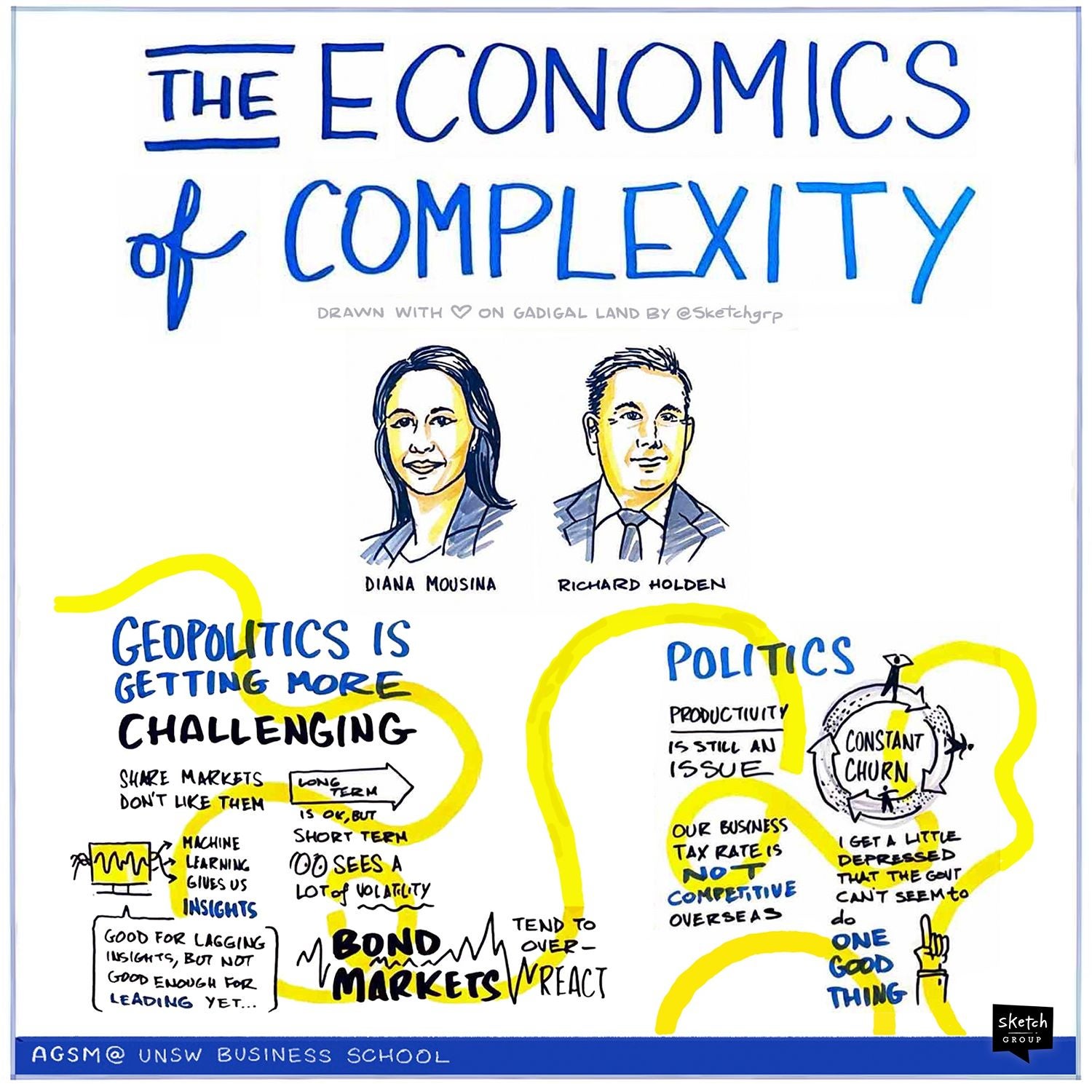
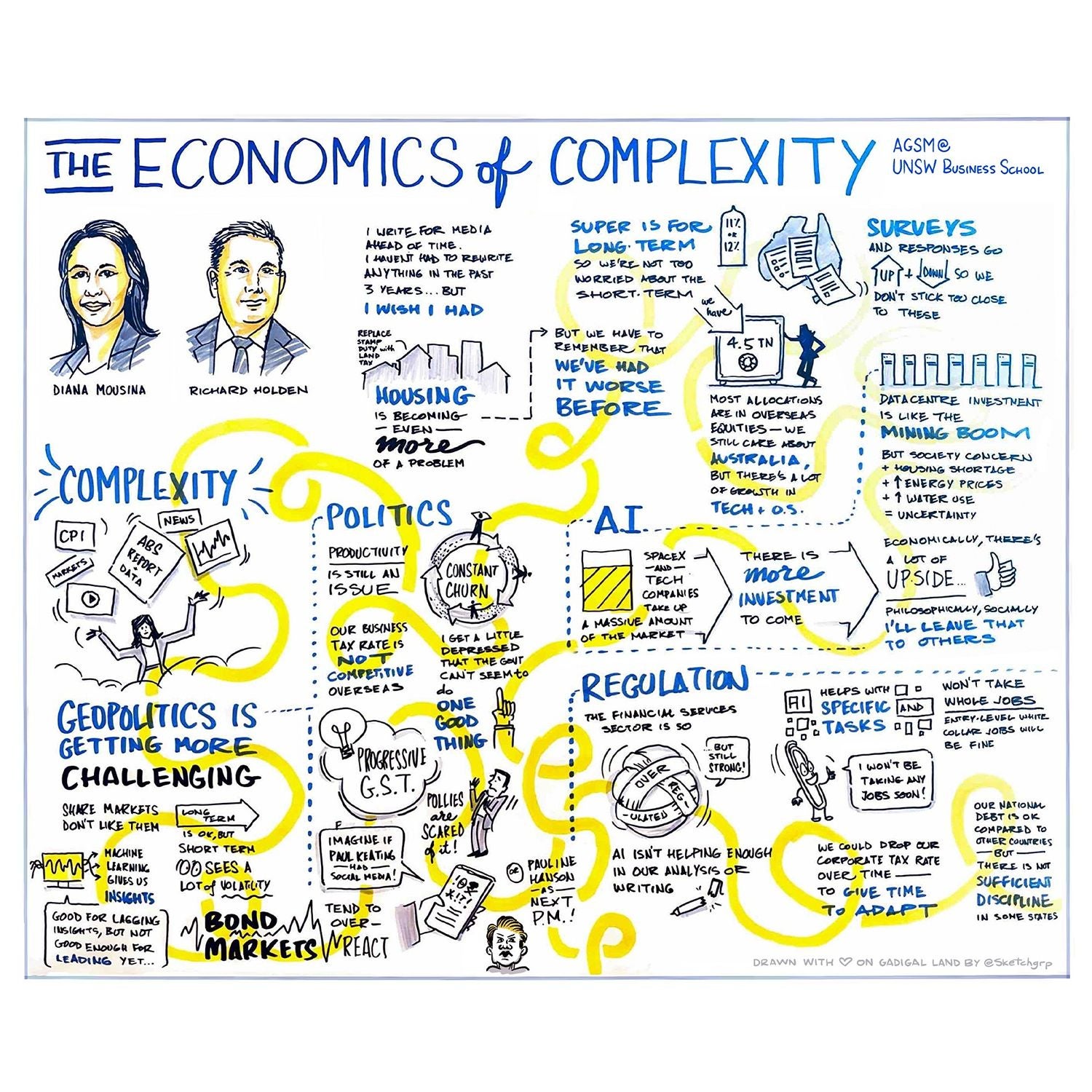



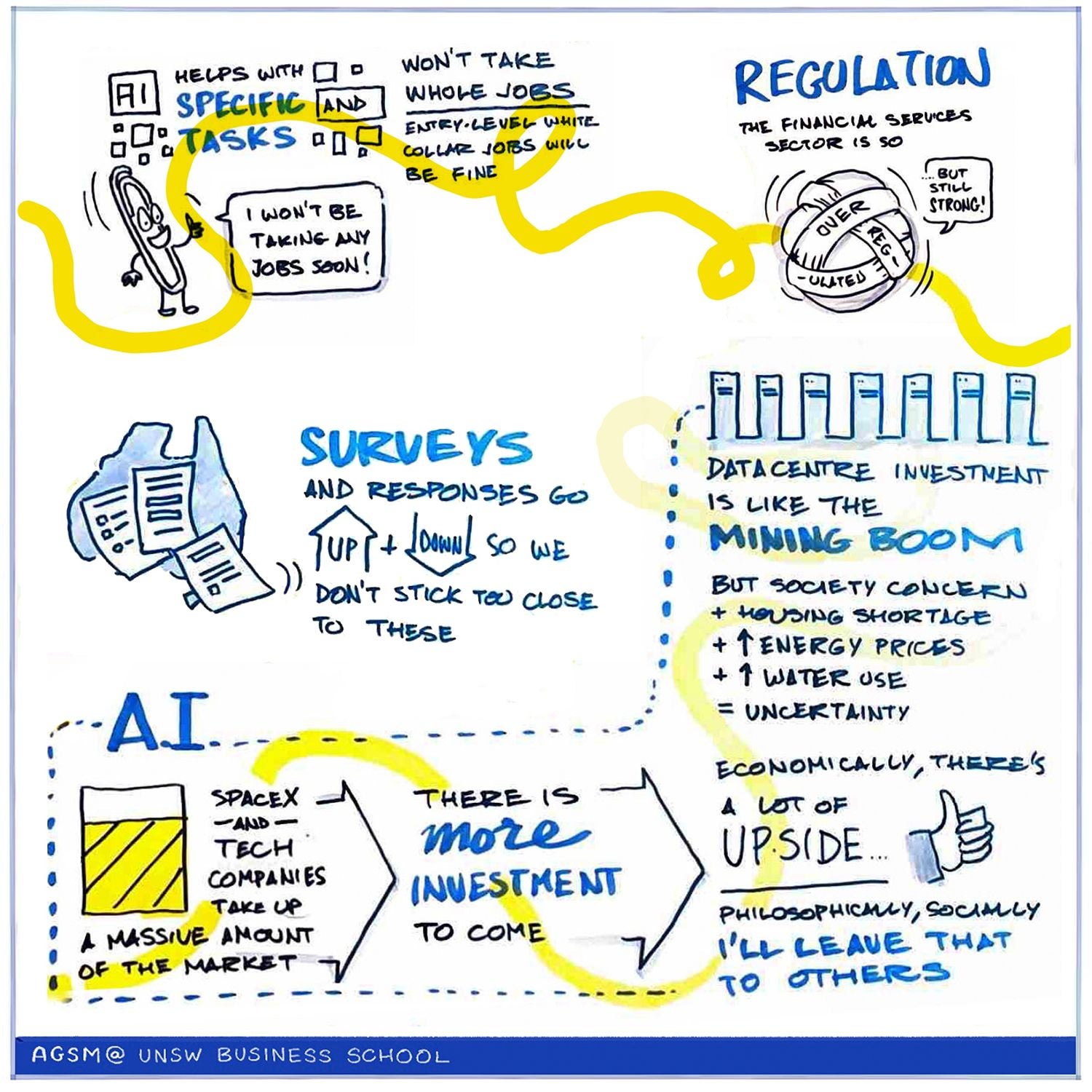
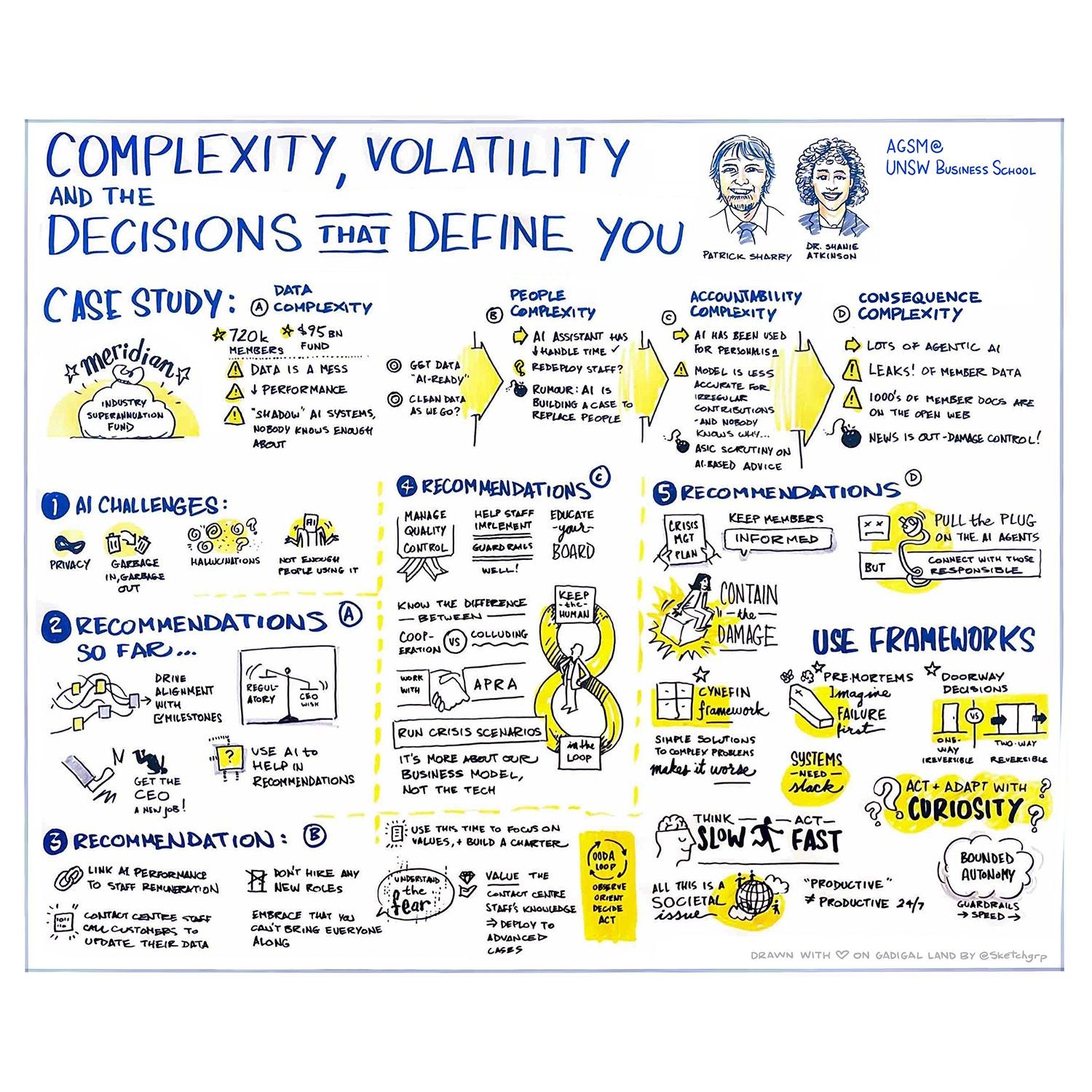
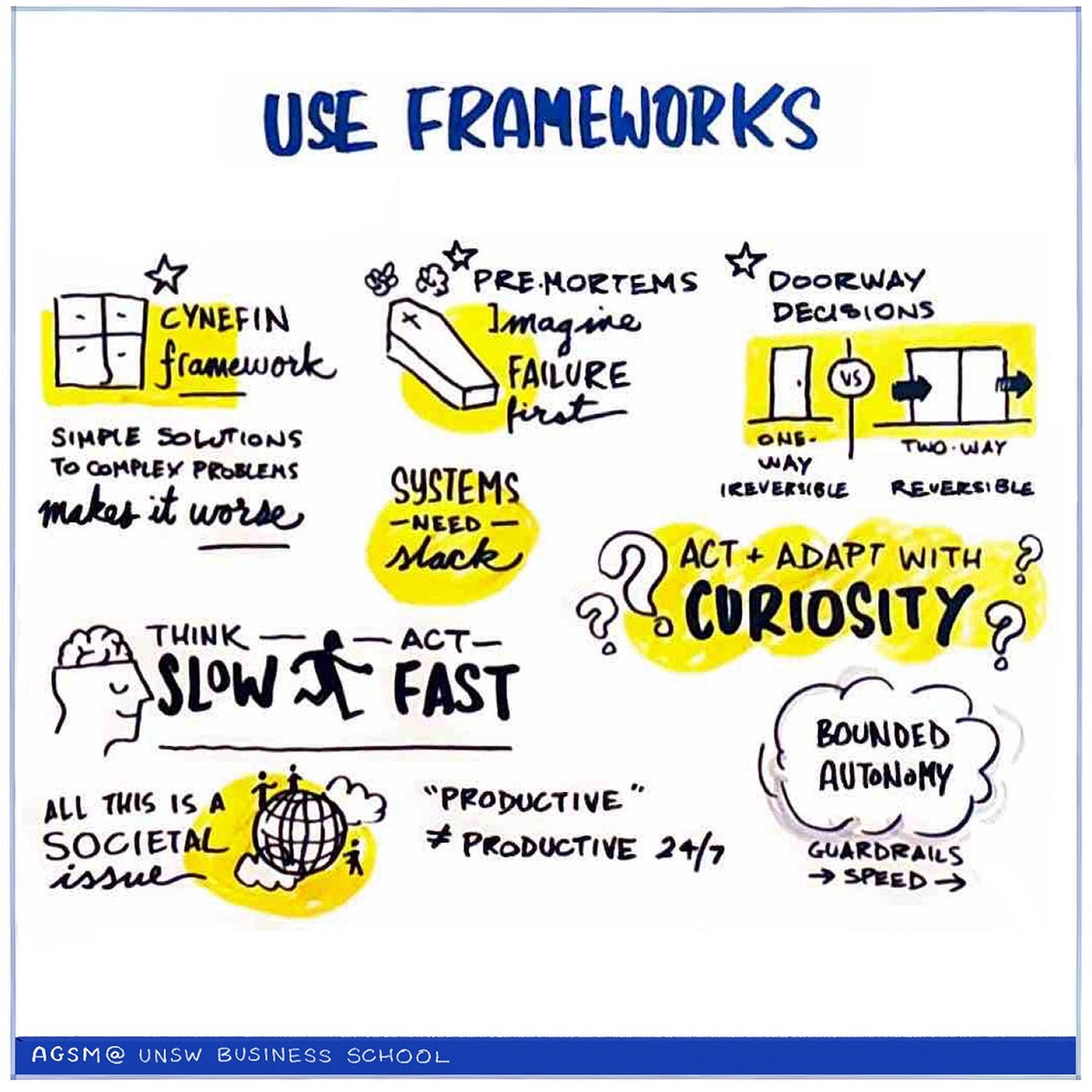
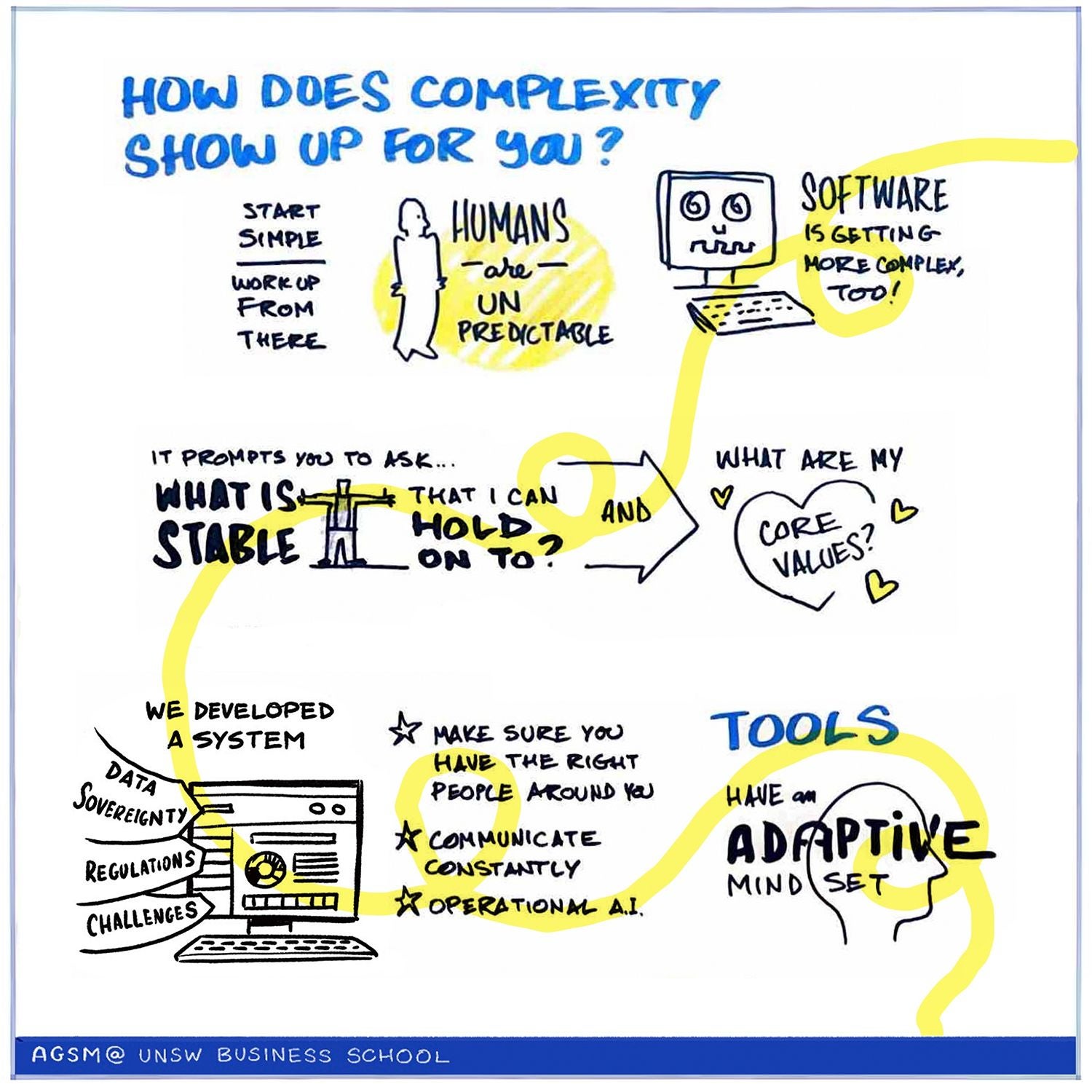
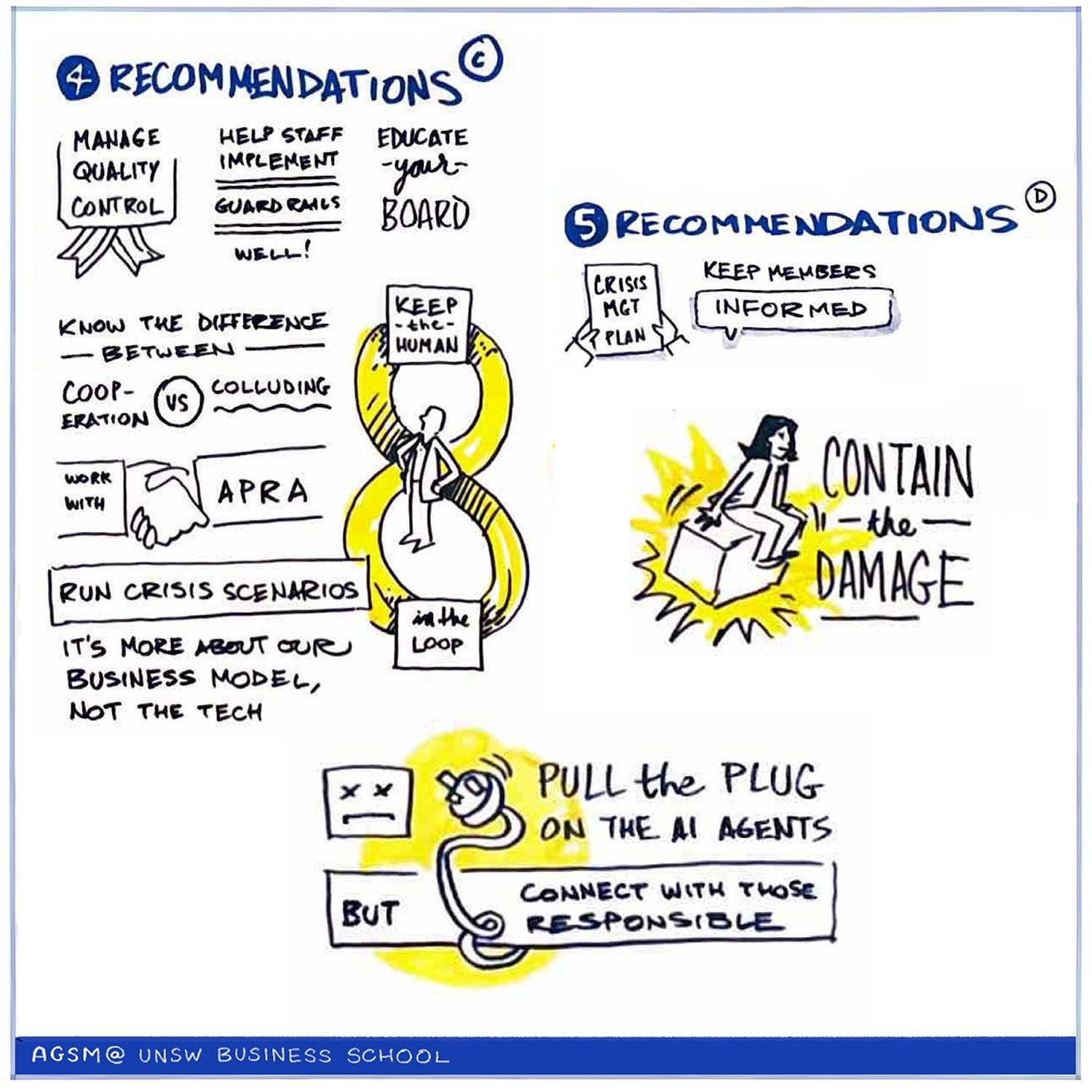
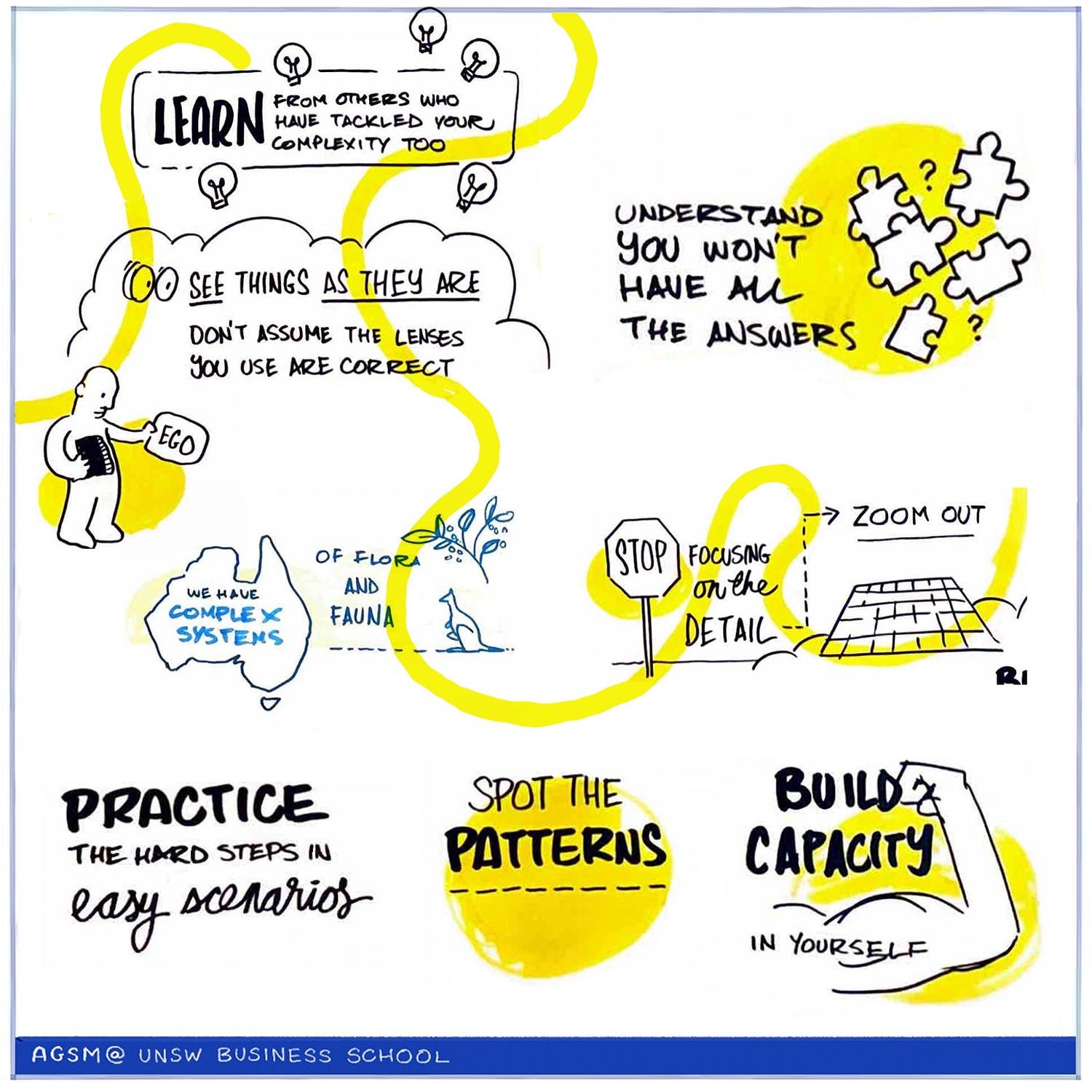
The Australian share market’s relatively limited exposure to technology means local investors have captured less of the growth generated by AI. “Our view is that we could still see another five to 10 years of good outperformance in countries like the US or even in emerging markets like Korea, where there’s good growth in the tech sector,” Ms Mousina said.
“Then, after 10 years, maybe the tables will turn somewhat,” she added. “But, for now, we are still investing heavily overweight into global markets.”
That approach has contributed to strong returns for super members, with balanced funds recording attractive growth during a period of particularly strong international market performance. “We’ve been having double-digit returns, so baby boomers and members generally should be pretty happy with their returns,” Ms Mousina said. “You also see it show up in the consumer spending data, where we know that the older cohorts have been spending more compared with the younger groups.”
Reading beyond the headline numbers
The signals running through the economy tell a complex story. Geopolitical events can send markets sharply lower before they recover; consumers can report recession-level pessimism while continuing to spend; and Australians can benefit from strong household balance sheets and super returns even as weak productivity weighs on wages and living standards.
Some of those contradictions reflect the different time horizons and experiences hidden within headline data. Others raise questions about what the conventional measures capture in the first place. As Ms Mousina said, “Because we can track things so much more now, shouldn’t we have all these stats? Things are quicker now – why can’t we see that in the productivity numbers?”

Productivity is particularly difficult to measure in healthcare and education, which have accounted for a growing share of Australian employment. In these sectors, processing more cases in less time does not necessarily mean producing better outcomes.
“How do you become more productive as a healthcare worker or as a teacher?” Ms Mousina asked. “Do you want the emergency doctors to be seeing 50 patients in one hour, or do you want them to be spending time looking at a particular case?” she said. “And when you take into account better healthcare outcomes, the productivity numbers look better.”
That measurement problem may partly explain Australia’s weak performance, but it does not account for all of it. Productivity has remained subdued even across the private sector, while regulation continues to constrain areas such as housing construction.
For investors, policymakers and business leaders, making sense of the economy increasingly means looking beyond any single figure. Complexity does not make the numbers less useful; it makes understanding what sits behind them – and what they leave out – more important.