

Lunar New Year career lessons in making your own "work luck"
Lunar New Year offers insight into external locus of control, sustainable careers and how individuals create career luck through readiness and action, writes Dr Jessica Yustantio
As the Lunar New Year approaches, my family elders always remind me to sweep the house clean and wear something red. On the eve of the New Year, we come together to share a dish called Ho See Fat Choy – dried oysters and black moss. I was taught that these rituals prepare us for what lies ahead. We clean the house to sweep away bad luck, wear red for good luck, and eat dried oysters and black moss because their pronunciation sounds like “good deeds” and “prosperity” in Chinese.
Scientific logic is unlikely to support a causal link between rituals of cleaning the house or consuming dried oysters and black moss with increased luck or prosperity. Yet, that framing misses the point. Many cultural traditions do not treat luck as random chance. Luck is patterned. It is something to be interpreted, anticipated, and worked with.

Luck and external forces
This way of thinking reflects what psychologists refer to as an external locus of control – the belief that life outcomes are shaped by external forces and factors beyond the individual’s control. Particularly in harmony-oriented cultures, people are encouraged to pay attention to timing, risk, and context. Ideas about favourable periods, compatible partnerships, and windows of opportunity invite individuals to move with their environment rather than push forcefully against it.
Cross-cultural research shows that in many East Asian, harmony-oriented societies, individuals are encouraged to adapt to circumstances rather than to dominate them. This is not passivity; rather, it encourages close attention to oneself and working alongside the environment. Interestingly, this perspective is not entirely foreign to Western thought.
Learn more: Learn to say “yes”: Behind the science of luck and serendipity
Research on sustainable careers shows that long-term career success is shaped by ongoing investment in employability and adaptability. That is to say that we cannot rely solely on isolated achievements to sustain our careers, but rather on more proactive shaping and adjustment in the face of external influences.
Similarly, research in entrepreneurship shows that entrepreneurs who are good at recognising new business opportunities are rarely passive. The combination of their continuous search for opportunities, alertness, and knowledge helps them “connect the dots” and notice patterns earlier, which they can use to their business advantage. What looks like luck from the outside is often the result of compounding attention, openness, and readiness.
From belief to behaviour
This is where the conversation can shift from belief in superstitious luck, into proactive, timely behaviour. Those who seem to encounter the best opportunities tend to share common traits.
They are prepared long before the opportunity appears. Years before the market understood AI, Nvidia was investing in CUDA and GPUs, which became the foundational technology for AI. Nvidia CEO Jensen Huang describes a habit of repeatedly returning to first principles – asking how things should be designed today, given current conditions, tools, and constraints – rather than relying on inherited ways of working. This kind of thinking is itself a form of preparation: by continuously learning, people and organisations are better positioned to recognise and act on new opportunities.
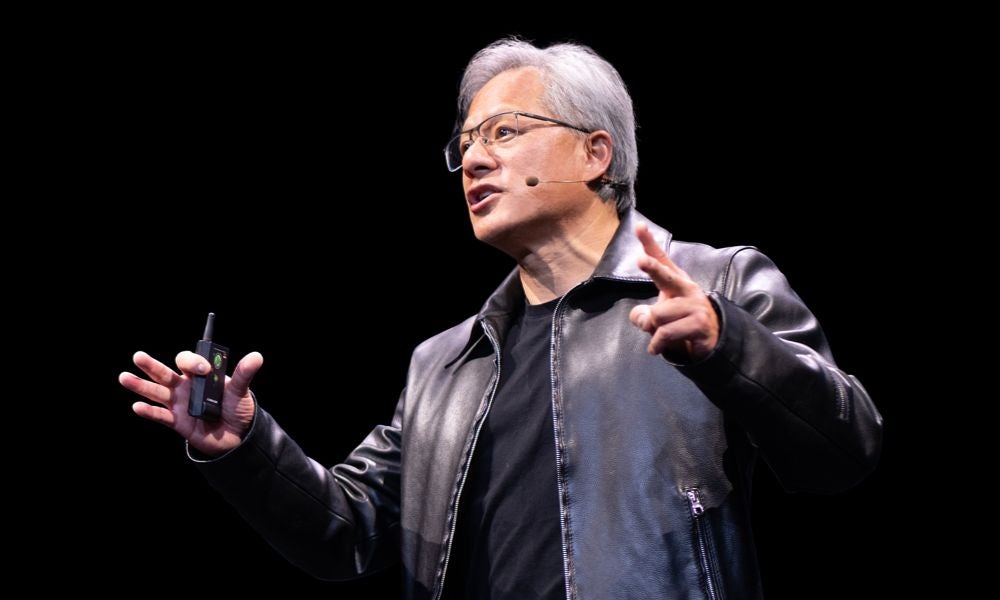
In the same way, people who appear “lucky” in their careers tend to build skills and keep learning ahead of necessity, so that they position themselves to recognise and seize opportunities when conditions change.
They treat setbacks as training rather than failure. In our dynamic workplaces, failures and unexpected changes are inevitable. The way individuals respond to these challenges can shape the trajectory of their careers. Studies on resilience suggest that those who recover well from setbacks and failures are better positioned for subsequent career success because they develop a strategic approach to navigating uncertain conditions.
They invest in relationships that later become sources of information and advocacy. Many opportunities arrive through people rather than processes - cultivating social capital is a core mechanism through which career “luck” is often created and leveraged. Informal conversations, weak ties, and someone thinking of you at the right moment often matter more than formal applications.
Relationships, in this sense, are both an investment and a multiplier – enhancing readiness, access, and influence. So when conditions shift – when a new role opens up, a sponsor takes notice, or a project suddenly gains momentum – some people are ready to move, while others are still scrambling to catch up.
Subscribe to BusinessThink for the latest research, analysis and insights from UNSW Business School
As Professor Anseel argued, individuals who learn to say “yes” and embrace opportunities over time are often placed in better positions where opportunity is more likely to emerge. Luck tends to favour those who have been quietly investing all along.
Applying Lunar New Year lessons to work
Traditions and beliefs about luck at the start of the year are often misunderstood as passivity or superstition. In reality, many cultures that pay close attention to luck place strong emphasis on preparation. Timing is not a substitute for effort – it is something to be respected alongside it.
Perhaps the most useful insight from Lunar New Year rituals in our workplaces is this:
Some forces sit beyond our control, and some sit firmly within it. We cannot dictate economic cycles, organisational restructures, or global uncertainty, but we can decide how ready we are when conditions in our environment shift and develop our adaptability.
Learn more: How a career of ‘calculated risks’ drove Zip Co CEO’s success
In 2026, the Year of the Fire Horse is associated with freedom, energy, and forward momentum. It is often described as a year that rewards bold initiative, social connection, and visible action – a moment where confidence and readiness can intersect with opportunity.
So this Lunar New Year, alongside respecting cultural rituals, we can also build our career and capability to meet what the year brings. By working with our environment, cultivating skills, and investing in relationships, we create our own luck and are ready for the opportunities and challenges ahead.
Dr Jessica Yustantio is a sessional academic and research assistant in the School of Management & Governance at UNSW Business School.