

Lessons in tackling inequality from the US education system
The widening achievement gap in the US shows that rising college attendance can’t overcome structural inequality – offering lessons for Australia’s own education future
Throughout the 21st Century, the US has continued to struggle with deep disparities in academic achievement and educational attainment, especially across public schools and school districts. Despite decades of education research, education policy reforms and new initiatives from the US Department of Education and state government agencies, the achievement gap between African American, Black students, Hispanic and Latino learners and their higher-income peers persisted at every stage, from elementary school through high school and even high school graduation.
Data from the National Centre for Education Statistics (NCES), for example, shows that socioeconomic status, family income, and uneven school funding have continued to shape the school system, creating unequal educational opportunity, higher dropout risks for disadvantaged students, and stark differences in educational outcomes.
While some school districts have expanded education programs to support students of colour, Asian Americans, and English language learners, progress has remained uneven, with public education struggling to deliver consistently high-quality education.
Education inequality is rising despite rising college attendance
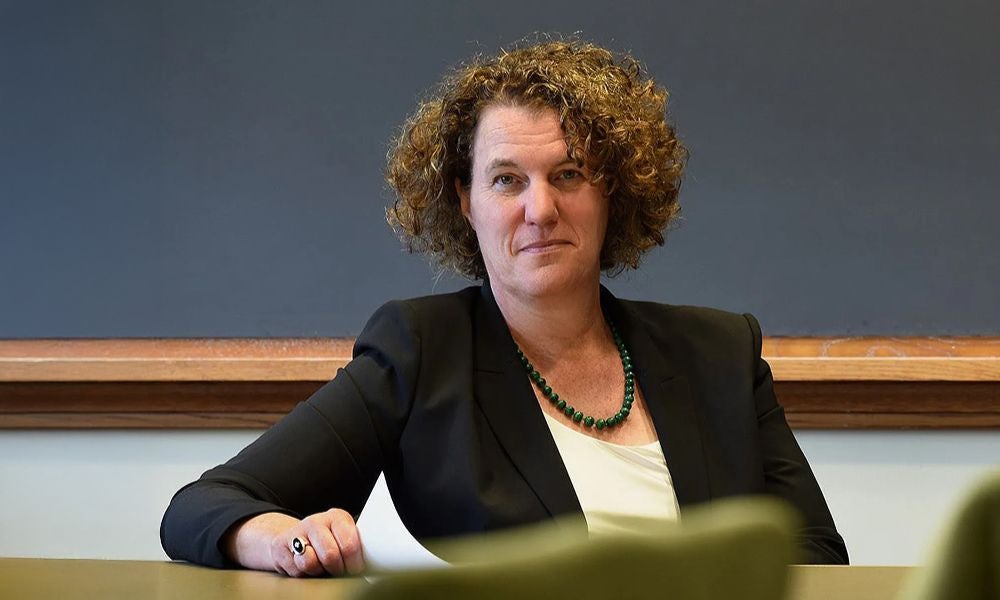
Harvard University scholars such as Professor Susan Dynarski have argued that addressing income inequality and levelling the playing field for all American students requires not only better data but also structural changes that recognise the different levels of education and opportunities available to white children, white students, and others across the nation.
Speaking at the 2025 UNSW Step Up Conference, Prof. Dynarski, one of the world’s leading experts on education inequality and economic mobility, demonstrated that while college attendance and degree completion rates had increased across generations in the US, the gap between low- and high-income students had continued to widen.
As she stated in her keynote: “These gains mask substantial inequality by income.”
Learn more: Financial illiteracy: The hidden threat to Australia’s economic future
Her analysis revealed that high-income students were more than 50% more likely to attend college and nearly 45% more likely to complete a bachelor’s degree compared to students from the lowest-income families.
Prof. Dynarski stressed that this divide persisted even among the highest-performing students. As she demonstrated, “Low-income students with top test scores complete college at roughly the same rate as high-income students with mediocre scores.”
For business leaders, these findings signalled a long-standing and costly inefficiency: a large share of capable future workers had been blocked from opportunities that could have expanded the national talent pool.
Simplified college access has dramatically improved outcomes
Drawing on decades of research, Prof. Dynarski has identified complexity, uncertainty and administrative burden as major drivers of inequality. She explained that many students had been deterred not by ambition but by “uncertainty, complexity, and perceived affordability.”
Her landmark study of the High Achieving Involved Leader (HAIL) Scholarship provided compelling evidence. High-achieving, low-income students who received an early, unconditional promise of free tuition more than doubled their application rate – rising from 26% to 67% – and substantially increased their likelihood of enrolling at the University of Michigan, with shifts away from two-year and less-selective four-year institutions.
Subscribe to BusinessThink for the latest research, analysis and insights from UNSW Business School
Prof. Dynarski also showcased two additional strategies that had been shown to reduce inequality:
- Universal screening has increased the participation of low-income and minority students in gifted and college-readiness programs by removing reliance on parent or teacher advocacy.
- Financial aid simplification has reduced bureaucratic barriers and encouraged more eligible students to pursue higher education.
These low-cost interventions had demonstrated powerful results and were considered highly scalable approaches to improving college access and educational equity.
Education inequality had significant consequences for workforce development and economic growth
Prof. Dynarski emphasised that educational inequality had long-term consequences for business, the economy and society. Because selective universities offered the strongest wage returns and the highest graduation rates, the underrepresentation of low-income students in these institutions had limited the diversity and depth of the future workforce.
This inefficiency, she argued, had limited innovation, social mobility and leadership representation. For employers, this meant missing out on talented individuals who could have contributed to a more dynamic, resilient and inclusive business environment.
Learn more: Righting the ship: Can sponsors can help save struggling schools?
She urged business leaders and policymakers to support reforms that:
- Increased transparency and simplification in university admissions and financial aid processes
- Provided early, credible financial commitments that reduced student uncertainty
- Expanded equitable talent identification through universal screening
- Built partnerships that strengthened pathways into high-growth industries
Prof. Dynarski concluded that the challenge had never been a lack of ability among low-income students. Rather, it had been a set of avoidable structural barriers. Reducing these barriers, she argued, represented not only a moral imperative but a strategic investment in the future workforce.