

A hidden growth engine: How process innovation drives value
UNSW research finds foundational process innovations generate 30% more economic value per patent and sustain firm growth for seven or more years
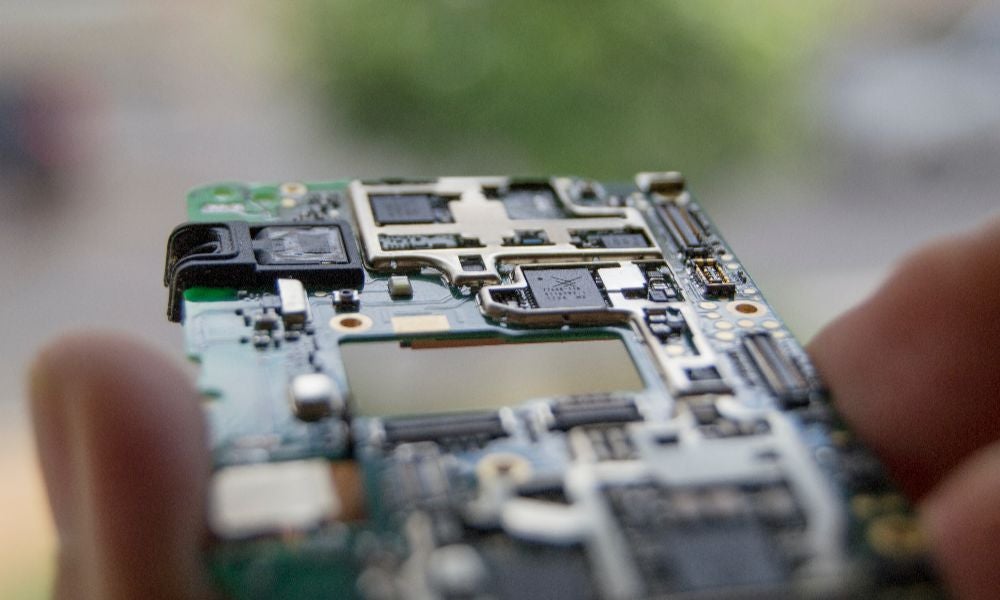
In the late 1960s, semiconductor manufacturers developed photolithography, a process for etching ever-smaller circuits onto silicon wafers. It was not a new product. It was a way of making things. But once chips could be miniaturised reliably, an entire cascade of products followed that had been physically impossible before: personal computers, mobile phones, smartphones, smartwatches, modern medical devices, and AI accelerators. The process came first; the products followed for half a century.
This is the type of innovation business strategy tends to underweight. Most firms organise their innovation portfolios around products. Process improvements are usually framed as efficiency exercises, cheaper assembly, leaner supply chains, and less waste. But new research suggests that the most consequential process innovations are not about doing existing things more cheaply at all. They are about expanding what a firm is capable of producing in the first place.

The study, Foundational Processes and Growth, was co-authored by UNSW Business School Associate Professors Wing Wah Tham and Elvira Sojli, together with Salomé Baslandze, Research Economist and Assistant Adviser at the Federal Reserve Bank of Atlanta and University of Technology Assistant Professor Leo Liu. Published in The Journal of Financial Economics, the researchers analysed millions of patent texts from 1900 to 2020 to understand the relationship between different types of innovation and firm growth.
“Standard innovation models treat every patent as essentially the same kind of progress, but when we looked at what was actually happening inside firms, that abstraction was hiding something important,” A/Prof. Sojli explained. “Some process innovations just make existing things cheaper. Others unlock entirely new product categories; they let firms do things they simply could not do before. We wanted to measure that distinction at scale and understand what it meant for growth.”
Understanding different innovation types
For most of the past century, economists have viewed innovation through two primary lenses: product innovation (creating new or improved products) and process innovation (inventing new methods or techniques for production). This study argues that process innovation itself comes in two distinct flavours with significantly different impacts on business growth.
Cost-reducing process innovations improve the efficiency of producing things a firm already makes. Tesla’s modular “unboxed” assembly is a recent example: it builds cars in parallel sub-assemblies rather than along a single line. 3D printing is also used to reduce material waste in aerospace components. These innovations cut costs and lift margins on existing products. They do not change what the firm is technologically capable of producing.
Foundational process innovations do something different. They alter the firm’s underlying production technology and open the door to product categories that were not previously feasible. Photolithography is one example. The polymerase chain reaction is another process for rapidly duplicating DNA that has become the platform for modern genetic testing, mRNA vaccines, and gene therapies. CRISPR-Cas9 is the most recent. Each began as a way of doing something inside a laboratory or factory, then catalysed a generation of products.
To separate the two empirically, the researchers used textual analysis on patent documents, classifying patents first as product or process, then sorting process patents by their similarity to a firm’s past versus future products. A process patent that looks unlike the firm’s existing products but is highly similar to what the firm produces in the years that follow is the empirical signature of a foundational innovation. The classification was validated against intellectual property experts and patent examiners, with over 93% agreement.
Learn more: Why innovation isn’t translating into productivity growth
About 58% of US patents granted between 1900 and 2020 are product patents. Within the process category, 69% are cost-reducing, and roughly 31% are foundational. The share of foundational patents has risen markedly since 1990, tracking the spread of digital, biotech and microelectronics platforms.
How different innovations impact business growth
The two types of process innovation affect firm performance on different timescales. Cost-reducing innovations deliver short, sharp gains: sales and profits rise within the first three years of a patent grant, then plateau. This is because lower production costs translate quickly into better margins or lower prices, but the benefit is a one-time level shift.
Foundational process innovations behave differently. Their effects on firm growth persist for seven years or more. They are also more valuable on a per-patent basis: foundational process patents have around 30% higher private economic value than cost-reducing ones, measured by stock market reactions to patent grants.
“This isn’t about which firms are better; it’s about which innovations build on deeper technological roots"
ELVIRA SOJLI
The reason is that foundational processes do not generate sustained growth on their own. Rather, they generate it by enabling subsequent product innovation. Products that build on foundational process patents have 34% more forward citations and 22.5% higher market value than products that do not. And firms with larger stocks of foundational patents expand into more technology classes; a 10% increase in foundational patents is associated with a 4.3% increase in the number of technology categories the firm patents in. Cost-reducing patents show no such effect, and in some specifications, a negative one; efficiency gains in existing production seem to discourage exploration of new categories.
“We find that foundational processes lead to sustained firm growth, especially through their effect on subsequent product creation,” the researchers explain in their paper. “Essentially, foundational processes create the technological groundwork that allows firms to subsequently develop higher-quality products using completely new processes.”
A/Prof. Sojli explained: “The smartphone is the canonical example: once chip miniaturisation was possible, firms did not just make a single high-quality chip, they proliferated phones, tablets, wearables and connected devices, each more valuable because the underlying platform had jumped.”
The link between foundational processes and high-value products
To assess whether patent-level findings translate into actual products on the market, the researchers turned to the FDA’s Orange Book, which links every approved small-molecule drug in the United States to the patents that protect it. The Orange Book provides a clear mapping: each drug can be traced to whether the patents underpinning it are foundational.
The pattern matches the firm-level results. Drugs that rely more heavily on foundational process patents generate larger market reactions to FDA approval, are more likely to receive priority review status (a designation reserved for therapies offering a significant clinical advance), and generate higher downstream spending through Medicare and Medicaid. Crucially, this comparison holds within the same pharmaceutical firm, so it is not explained by some companies being better than others. It is specific drugs, built on deeper technological foundations, that command the premium.
A/Prof. Sojli noted that the FDA result was particularly telling because the comparison happens within the same firm. “We can see that within a single pharmaceutical company, the drugs that build more heavily on foundational processes attract bigger market reactions on approval, are more likely to receive priority review, and generate higher Medicare and Medicaid spending years later,” she said.
Subscribe to BusinessThink for the latest research, analysis and insights from UNSW Business School
“This isn’t about which firms are better; it’s about which innovations build on deeper technological roots. And the same pattern shows up at the country level: nations that produce more foundational process innovations grow faster in GDP and productivity over the following four years.”
The link to basic science
Where do foundational process innovations come from? The patent data points clearly toward basic science. Foundational process patents cite 16-21% more non-patent literature, predominantly academic publications, than other patents. Firms with larger foundational patent stocks also publish more academic papers themselves, with an elasticity of around 0.5. The basic research-to-applied innovation pipeline runs through these patents in both directions.
This matters for how firms should allocate R&D. Foundational processes are not the product of incremental engineering on existing production lines. They emerge from work that draws directly on fundamental scientific knowledge, the kind of research often dismissed as having no near-term commercial application. The data suggests it has substantial long-term commercial value, mediated through the foundational processes it eventually enables.

Implications for business strategy and investment
For business leaders, the composition of R&D matters as much as the level. A dollar spent on cost-reducing process improvement pays back quickly but does not compound. A dollar spent on foundational process work carries longer lead times and more risk, but builds the platform on which higher-value products are subsequently launched. The firms with measurable advantages in foundational innovation are also the ones producing the highest-value products downstream, a sustainable competitive advantage that is genuinely difficult for competitors to replicate.
The research also speaks directly to the offshoring debate. In high-tech sectors, product design and manufacturing process are deeply entangled, design choices constrain how things can be made, and manufacturing capability constrains what can be designed. When firms outsource advanced manufacturing, they are not just shifting where things are produced. They may be shifting where the next generation of foundational process innovation happens.
“Most of today’s high-tech products are complex and have low modularity; manufacturing choices and product design are deeply entangled"
ELVIRA SOJLI
“Most of today’s high-tech products are complex and have low modularity; manufacturing choices and product design are deeply entangled,” A/Prof. Sojli said. “When firms outsource advanced manufacturing, they’re not just shifting where things are made. They’re potentially shifting where the next generation of foundational process innovation happens, and with it the next wave of high-value products. This is why the reshoring debate is not only about jobs or supply chains. There is a real innovation channel at stake, and policymakers should weigh it carefully.”
Key takeaways for business professionals
A/Prof. Sojli said that understanding the distinction between foundational and cost-reducing process innovations provides valuable guidance for strategic decision-making:
- Evaluate your innovation portfolio to ensure it includes foundational process development alongside product innovation. While product innovation remains important, firms that neglect foundational process capabilities may miss opportunities for transformative growth.
- Consider the long-term consequences of manufacturing outsourcing. The research implies that offshoring advanced manufacturing may limit a firm’s ability to develop foundational process innovations, potentially constraining future product innovation capabilities.
- Invest in connections to basic scientific research. Foundational process innovations often build upon advances in basic science. Firms that cultivate relationships with research institutions and remain connected to scientific advances position themselves to develop more foundational process innovations.
- Recognise that immediate efficiency gains may come at the expense of long-term growth potential. While cost-reducing process innovations deliver faster returns, foundational process innovations drive sustained growth through enabling future high-quality products.
“The distinction between foundational and cost-reducing process innovation is not a matter of academic taxonomy. It is the difference between innovation that keeps a firm competitive in its existing markets and innovation that opens new ones. The firms and countries that master the latter will define the technological frontiers of the next several decades,” A/Prof. Sojli concluded.