

Bracket creep: who pays the most when tax thresholds are fixed?
The federal budget’s projected return to surplus relies heavily on bracket creep, but new research has found this lifts tax rates unevenly across workers on different incomes
A worker earning $45,000 a year today will lose 56% of any gain in take-home pay to bracket creep over nine years, after inflation, according to new modelling conducted by researchers through the e61-UNSW Policy Research Partnership.
The 2026–27 federal budget forecasts a return to surplus in eight years – half of which comes from spending cuts, and the other half from higher revenue – largely because inflation and wage growth push taxpayers into higher average tax rates.
Australia taxes income in steps called brackets, each with a higher rate. The dollar amounts where brackets begin (known as thresholds) stay fixed while incomes grow, so more income falls into higher brackets and the effective tax rate (tax paid as a share of total income) rises. This is otherwise known as bracket creep, which the researchers describe as “a tax increase by stealth”.
For example, for a worker on $100,000 in 2025 dollars, inflation alone lifts the rate from 20.5% to 22.6% between 2027–28 and 2037–38. Add real pay growth of 1.2% a year and the average worker’s rate reaches 24.1%.
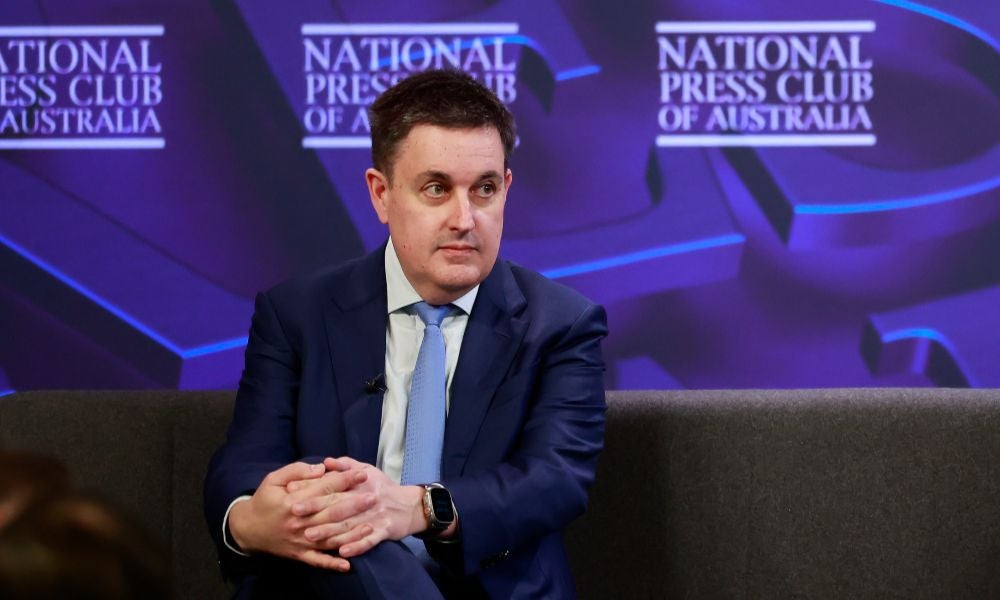
The research note, The Distributional Implications of Bracket Creep, is authored by Michael Brennan, CEO of e61, Richard Holden, Vice-Chancellor's Professor and Chief Societal Economist at UNSW Sydney, Greg Kaplan, Co-founder and Chairman e61 Institute and Professor of Economics at the University of Chicago, Matthew Maltman, Senior Research Economist at the e61 Institute, and Matt Nolan, Senior Research Manager at the e61 Institute.
The researchers ran a microsimulation – a program that calculates tax for each person in a sample of de-identified Australian Taxation Office records – with incomes growing 3.7% a year, including inflation, in line with Parliamentary Budget Office projections. The model assumes people do not change their work or income in response to tax, so it does not forecast individual earnings.
“Bracket creep is the only strategy the government has to balance the federal budget. But it has big implications for workers across the income distribution,” said Prof. Holden. “We wanted to document the magnitude of these stealth tax increases – especially for less affluent workers.”
Who pays most from bracket creep in Australia?
Workers on about $45,000 a year face the sharpest rise in effective tax rate, up by more than 5 percentage points by 2034–35 from its 2025–26 level. Rates rise by more than 2 percentage points for everyone earning more than $21,000 in 2025 dollars, apart from the top 1%. The modelling found that the average full-time worker, on about $100,000 a year in 2025 dollars, is among the least affected.
“Even modest increases in effective tax rates can have large implications for growth in take-home pay”, the authors write in the research note. The higher rate applies to total income, while a pay rise adds only a slice on top.
Subscribe to BusinessThink for the latest research, analysis and insights from UNSW Business School
The researchers assume that, if thresholds rose in line with earnings, disposable income – pay left after tax – would grow by more than 11% in real terms over nine years. Bracket creep takes back 56% of that gain for a worker on $45,000 and 65% for a worker on about $190,000, near the top tax threshold. Over the next decade, it reduces individuals’ disposable income growth by around 30%.
“Bracket creep takes back a meaningful chunk of hard-fought income gains. During a productivity and cost-of-living crisis it’s the last thing Australians need,” said Prof. Holden.
The research note suggests two solutions. One is slower growth in public spending, with support directed to where it is most valuable. The other is tax reform that raises revenue more sustainably and with less distortion to the economy than bracket creep. Either path needs explicit decisions, rather than tax rates rising without a policy change.
Why governments hand bracket creep back
Budget pressure is not new. The 2011 carbon tax package included personal tax cuts that became a net cost to the budget when the carbon tax was removed in 2014. As a result, from 2012–13 until 2017–18, bracket creep and the budget repair levy were used to return the budget to balance.
The 1.8 percentage-point rise in average tax rates from bracket creep over that period eventually led to pressure to cut rates, and by 2021–22, tax cuts had returned average rates to around their 2012–13 level.
The Coalition’s budget reply announced a plan to index tax thresholds to inflation, so they rise with prices, which the paper says would slow the rise but still lift the average worker’s rate to 21.5%.
Earlier this year, Federal Treasurer Jim Chalmers said that recent tax changes have handed bracket creep back. The researchers confirm the average worker will pay a lower rate in 2031 than in 2023–24, but this is largely because rates jumped when the low- and middle-income tax offset ended in 2022–23. Against 2021–22 or 2024–25 levels, average rates are actually higher than they would have been, had bracket creep been handed back.
“We can’t count on the government to hand back bracket creep when they have no other path to fiscal sustainability,” said Prof. Holden
Why budget forecasts built on bracket creep are not credible
Government spending rose from around 35% of gross domestic product (GDP, the size of the economy) in the early 2000s to 38.2% in 2024. Given current spending priorities and population ageing, it is projected to remain above 40% of GDP from around 2050 onward.
Projections from e61, the OECD and the Parliamentary Budget Office assume the budget will be restored partly through the extra tax that bracket creep raises. If future tax cuts return some or all of it, however, these forecasts are not credible without lower spending or revenue from other sources.
“Budget balance and fiscal sustainability have to come from spending restraint, as we saw under Treasurers Keating and Costello. And increasing income tax rates by stealth is simply a tax on work and workers,” said Prof. Holden.