

What the science of wellbeing means for your career
BCG veteran Grant Freeland built a career at the top of global consulting, and learned the hard way that wellbeing is a strategy – not a reward
There is a common assumption that Grant Freeland has noticed among every cohort of students he has taught at Harvard Kennedy School and the Tuck School of Business at Dartmouth. When they see someone who has reached the senior levels of a demanding profession, they assume the path there was relatively linear.
The reality is often not the case, according to Mr Freeland, who serves as Senior Advisor and Senior Partner Emeritus at Boston Consulting Group (BCG), in addition to his adjunct roles at two top US Business Schools. In a recent presentation to AGSM MBA students during the school's leadership week, he reflected on his career path, which he said was certainly not straightforward.
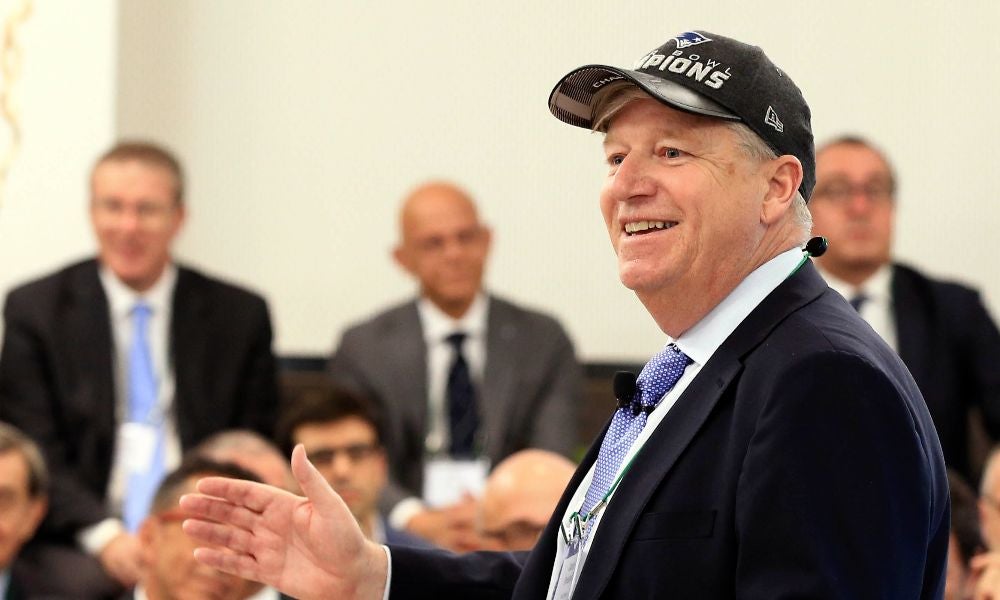
Mr Freeland, an AGSM MBA Alumnus, charted his career to date through a presentation, with time on the horizontal axis and career success on the vertical. "I'm a boring consultant, so I have to draw a graph," he quipped, before asking the room to guess the shape of the line from zero to the top. The answers came back: a hockey stick, a step function, a gentle upward curve. His actual line, he candidly told them, was a “much larger squiggle”, with lows few in the room would have predicted.
The spreadsheet that almost ended a career
Mr Freeland's first serious career setback came early. After a strong debut year doing the kind of work he excelled at, he was assigned to a pricing project that required building large, complex spreadsheets. For a consultant whose behavioural profile is heavily weighted toward interpersonal drive and influence rather than detail orientation and process, the assignment was a fundamental mismatch.
A second pricing project followed, then a third, with partners approaching him for this work as he was, by then, considered the office's reluctant expert. What saved him was a reframe on the third project, after he found a way to shift from a pure price analysis to the broader question of how a client was interacting with its customers.
Learn more: Why responsible leadership starts with better emotional intelligence
As someone who poured himself into his work, Mr Freeland acknowledged that this was a stressful time for him as he experienced sleeplessness and a level of clinical anxiety. A clinical psychologist who specialised in hypnosis therapy provided him with a diagnosis as well as assistance to help him get back on track personally, which also helped him out of his career rut at the time.
The cost of the climb
The anxiety was, as it turned out, the first of three mental health episodes requiring medical intervention across Mr Freeland's career. The second came after he moved to the Boston office following a period of study at Harvard. Personal circumstances in Australia had changed for him, and with the move to the US, he found himself in an office culture that, by his own description, was not particularly welcoming.
This was a “dark and alone” time for Mr Freeland, who shared his experience with one friend – who told him never to tell anyone, and specifically not to declare it on insurance for fear of what it might do to his career. He sought psychoanalysis privately, disappeared from the office for a couple of hours a week, and worked through it without colleagues knowing. What helped pull him out was meeting his wife, Beth, and building a social community in a city that had felt isolating. "No one hardly knew, because I was doing really good work,” he recalled.
"You can be very happy with $150,000 or $200,000, but if you start comparing yourself against those with a private equity gig, for example, you can destroy that happiness"
GRANT FREELAND
The third episode came in 2020, as the pandemic, racial inequality, and a fractured political environment in the United States converged. He described waking each day feeling sick to his stomach, morning and night. With the assistance of a common anti-anxiety and anti-depression medication, coupled with some simple relaxation exercises and a changed outlook on life, Mr Freeland said things improved significantly.
"I do breathing exercises four times a day, and I have adopted more Buddhist ideas. This is how I've managed it,” said Mr Freeland, who explained that this about-turn was the catalyst for his interest in what he calls “careers in life” and his interest in giving back through teaching.
What actually drives wellbeing
Mr Freeland also drew on the work of Distinguished Professor of Psychology at the University of California, Sonja Lyubomirsky, whose wellbeing model, published in 2005 (and later popularised in her book The How of Happiness) proposes that roughly 50% of our wellbeing is determined by genetics, around 10% by life circumstances (income, housing, status), and the remaining 40% by intentional activity; essentially, the choices we make about how we think, behave, and engage with the world.
He acknowledged the model is contested and that the precise proportions continue to be debated, but holds firm to what he sees as its actionable message. "You have agency,” he affirmed. “My wellbeing is predominantly driven by how I deal with it, not my circumstances. That's why people who have chronic illnesses can still have high wellbeing, because it's how they deal with it that matters."
Subscribe to BusinessThink for the latest research, analysis and insights from UNSW Business School
On the practical tools for improving wellbeing, Mr Freeland also referred to the work of Martin Seligman, widely regarded as the father of positive psychology. He cited gratitude practice, optimism, kindness, forgiveness, goal-setting, spirituality, physical activity, and therapy as important.
His own centrepiece in life is gratitude. Each year in one of his courses, for example, he asks students to write a three-page letter of thanks to someone who shaped their life, then read it aloud to that person. "The beauty of gratitude is that it's not only the person receiving the gratitude who loves it; the person who gives the gratitude often feels even better. The science actually shows it,” he said.
Sleep also belongs in any serious conversation about performance and wellbeing, according to Mr Freeland, who coaches CEOs on it as a matter of professional performance, tracking it and working through the practical barriers, particularly for executives who travel internationally and habitually sacrifice rest for productivity.
The happiness curve has changed shape
Mr Freeland also addressed how wellbeing shifts across life and drew on the Human Flourishing Program from the Harvard School of Public Health, which is based a large study spanning more than 50 countries. Historically, researchers found a U-shaped curve in which people reported relatively high wellbeing in youth, dipped in middle age, and recovered in later life as obligations eased and perspective deepened. That pattern has shifted, according to Mr Freeland, who explained how contemporary data shows wellbeing starting lower in youth and increasing more steadily over time, without the same pronounced recovery after midlife.
He put this down to social comparison and the role digital platforms play in amplifying it: "Social media is like comparing someone's best outside with your worst inside," said Mr Freeland.
"Working for a great brand that you hate, the only thing that's good for is telling your mother and cocktail parties"
GRANT FREELAND
When it comes to money, Mr Freeland said research (using real-time wellbeing tracking via smartphones) found that day-to-day emotional experience keeps improving with income up to a threshold of around US$250,000 in household earnings, after which it flattens. For MBA graduates likely to have a working partner and a professional income, he says the implication is that, beyond a certain point, each incremental salary increase delivers diminishing returns on actual wellbeing.
To illustrate the “comparison trap”, he drew on a now-famous experiment involving capuchin monkeys, in which an animal perfectly content with a piece of cucumber becomes immediately distressed upon watching a neighbouring monkey receive a grape for the same task. “There is a similar trap in money,” he said. “You can be very happy with $150,000 or $200,000, but if you start comparing yourself against those with a private equity gig, for example, you can destroy that happiness."
His advice to students who plan to pursue careers alongside peers entering higher-paying fields is to curate their social world carefully, as the comparison trap operates in real time, at dinner parties and alumni events alike.
What job satisfaction actually requires
In closing his presentation, Mr Freeland addressed the genuine drivers of job satisfaction. The work itself matters: “Is it interesting, does it produce a sense of meaning and accomplishment?” he asked. Agency is also important: “Do you have genuine autonomy in how you work? The people matter: is there a team that supports growth? And personal fit matters: does the role align with how you want to live, accounting for hours, travel, and lifestyle?”
What is notably absent from the list are money and status, added Mr Freeland, who referred to the Harvard Grant Study (also known as the Harvard Study of Adult Development), the longest-running scientific study of human health and happiness. He said the central finding is that close relationships, more than wealth, status, or professional achievement, are the strongest predictor of health and happiness in later life.
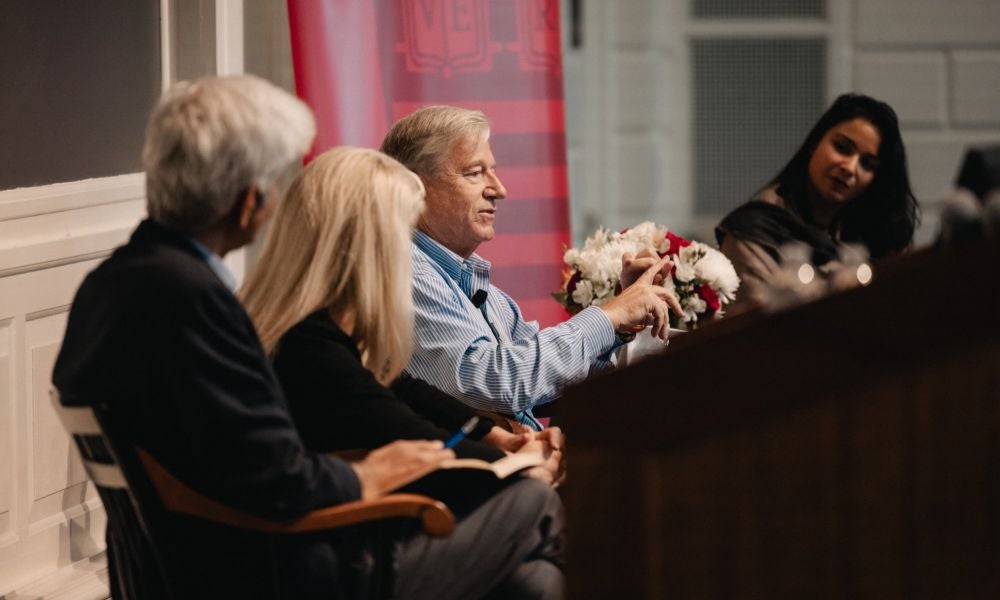
However, he acknowledged that a prestigious employer brand is worth something in the market. "But working for a great brand that you hate, the only thing that's good for is telling your mother and cocktail parties,” he said.
Rather, what drives genuine satisfaction mirrors the drivers of a good life: meaning, purpose, community, growth, and ultimately, kindness. "The world needs a lot more kindness. You can be successful as a leader and be kind – and you can change the world by being kind,” he concluded.
5 key takeaways for business professionals
1. Know your behavioural profile, and protect your relationship with work accordingly. Mr Freeland's near-derailment at BCG came from sustained misalignment between his natural strengths and the work he was assigned. The recovery came from reframing a brief in a way that brought those strengths back into play. For leaders responsible for staffing and development, the practical implication is that misalignment between a person's behavioural profile and their daily work is not a minor inconvenience; it is a material performance and wellbeing risk.
2. Treat mental health as a professional matter, not a personal weakness. Mr Freeland experienced clinical anxiety, clinical depression, and a third episode triggered by external events, across a career in which he was simultaneously performing at the highest levels of his firm. The stigma he encountered (such as advice not to disclose for fear of career damage) is a problem that organisations bear a direct cost for perpetuating. Leaders who normalise mental health treatment make their organisations more functional, not less.
3. The 40% within your control is where the leverage is. Dr Lyubomirsky's wellbeing model makes one point that holds regardless of the debate about its precise proportions: intentional activity matters more than circumstances. For professionals who have reached a reasonable income level, further salary increases are a weaker source of sustained wellbeing than the quality of relationships, engagement with meaningful work, and deliberate practices such as gratitude, sleep, and physical activity.
4. Social comparison is a structural risk for high-achieving professionals. Research on income and wellbeing shows that subjective financial satisfaction is heavily relative, not absolute. Professionals who socialise primarily with people earning significantly more are more likely to feel worse about their own circumstances, regardless of those circumstances' objective quality. Managing who is in your social circle as a point of reference is important.
5. Community is an investment, not a byproduct. The Harvard Grant Study finding that relationship quality at 50-years-old predicts health and wellbeing at 80-years-old should prompt a practical audit. For professionals in transition, whether through a new role, a geographic move, or a shift in life stage, actively maintaining existing communities and building new ones deserves the same deliberate effort as career development.