

The art of leading (without knowing everything)
Scentre Group CEO Elliott Rusanow explains why the leaders who admit they don't have all the answers are the ones worth following
Few business leaders reach the top on a straight path. Scentre Group CEO Elliott Rusanow is a case in point, and his journey offers lessons well beyond retail.
Around 30 years ago, he was a fourth-year law student at UNSW Sydney, majoring in marketing, largely by accident. He had planned to study science and nuclear physics, but lasted one maths lecture – then switched to a combined commerce-law degree that, by his own admission, he was not particularly good at.
The turning point came when he saw a flyer for summer internships at Bankers Trust. He ripped off a slip of paper with a contact phone number, typed up a resume, applied and was, as he put it, “thrust into the world of finance in the practical sense”. He fell in love with it immediately.
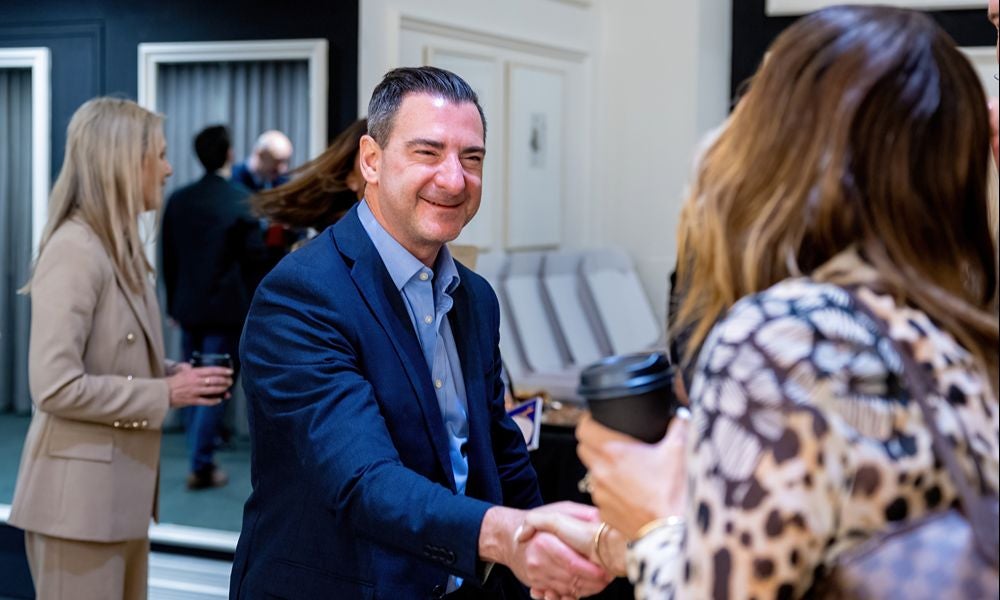
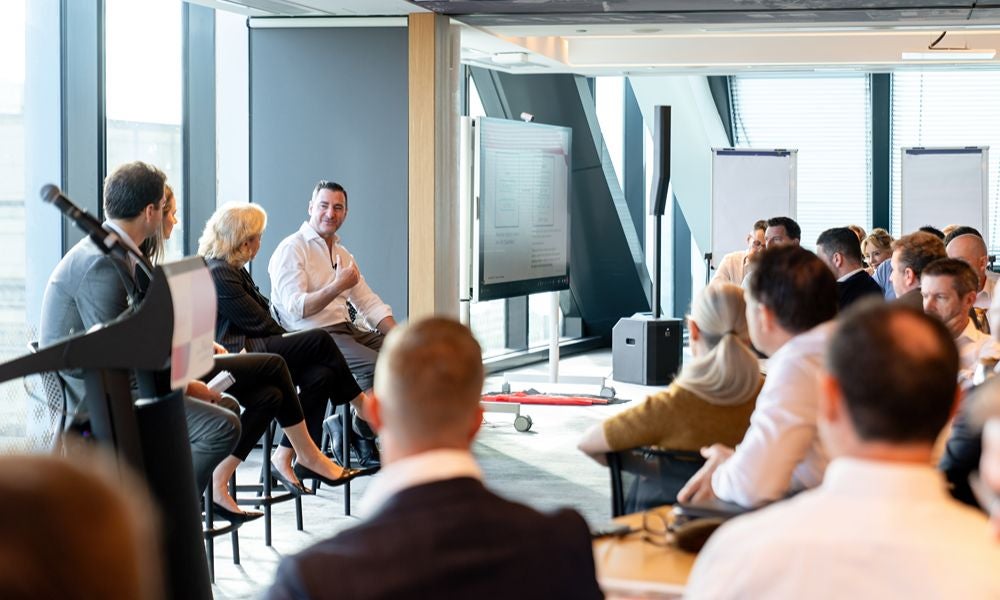
That experience shaped his views on education, career choices and hiring. At a time when students are asked to specialise early, he argued for the opposite. Speaking at AGSM @ UNSW Business School as part of a recent leadership week, he said it was the unplanned path that prepared him for what followed.
The case for the generalist
As CEO of Scentre Group, which owns, manages and operates 42 Westfield destinations across Australia and New Zealand, Mr Rusanow prioritises life experience over academic results when recruiting talent to the business.
“When we employ people, we don’t employ them for what they’ve learned academically," he said. "That matters, but it’s not the only factor. We look at their life experience and what they’ve done. Life isn’t linear. The choices that matter are the ones that shape you into a better person, and a better contributor to an organisation.”
He recalled a conversation at his children’s school in Los Angeles, USA, where educators are preparing students for jobs that don’t yet exist. The skills that endure are curiosity, resilience and adaptability: qualities that build on a solid educational foundation.
The master of chaos
Senior leaders don’t always have everything mapped out. In his own words, Mr Rusanow described himself as a “master of chaos”.
"If it’s not anchored to the core principle of the business, it becomes a cost to the business"
ELLIOTT RUSANOW
The challenge is turning complexity into something people can act on. “One person can’t achieve anything in isolation. Leadership is about aligning people around a clear purpose. That only works if they believe in it," Mr Rusanow explained. “The role of the leader is not to direct everything. It’s to create the conditions for the best idea to surface.”
He also knows when to step back. He explained that his presence in a room might have the potential to shut down ideas, and that removing himself could create better conditions for creativity and better thinking. “No idea is a bad idea. The issue is usually priority, not quality," Mr Rusanow said.
Knowing what business you are in
Mr Rusanow also challenged a common assumption: people don’t visit a shopping centre to buy products. If that were the case, he suggested that Amazon would always win the contest.
“Our customer is the person coming into the centre," Mr Rusanow said. "Without them, the business doesn’t sell its products or services and generate revenue. We are just concrete without people.”
Subscribe for the latest research, analysis and insights from UNSW Business School
The business competes for how people spend their time. Scentre Group’s strategy focuses on creating the places and experiences that people choose to come to more often and for longer. Mr Rusanow explained how every investment decision, every tenancy choice, every activation is tested via three questions: will it bring more people, will they stay longer, will they come back?
The pandemic period reinforced this. “When people couldn’t visit because of restrictions, the business suffered. When movement was unrestricted, people returned rapidly. It’s not often a crisis validates strategy," said Mr Rusanow.
The group’s strategy continues to deliver, with Scentre Group reporting a near 5% rise in funds from operations to $1.19 billion for FY25, with 540 million customer visits, up 2.7% year-on-year.
Values require a scorecard
Mr Rusanow also spoke about purpose statements and how they mean little without measurement.
“We have recently refined our purpose, and it is linked to clear metrics. Our number one KPI is customer visitation. We have around 11 million visitors a week, growing about 3.5% year on year," he said.
“Our second measure is Net Promotor Score (NPS). It’s grown from around 17 to 64 (as of May 2026), supported by 23,000 events and activations in Westfield destinations, including partnerships with Disney and Live Nation. Both words and measurable outcomes create value,” Mr Rusanow said.
Learning from the online bet
Westfield Direct, the company’s foray into online retail, is an example of when the group lost focus. The team measured success by gross merchandise value, which did not align with the core objective of driving visitation.
"If it’s not anchored to the core principle of the business, it becomes a cost to the business," said Mr Rusanow.
The initiative was closed. Uber Eats and Deliveroo were introduced, adding transactions through existing tenancies. At the same time, Scentre Group expanded Westfield Membership, and the program now has more than 5 million members, providing a direct connection to customers.
The most difficult leadership test
The most significant test of Mr Rusanow's leadership came on 13 April 2024, following the random and devastating attack at Westfield Bondi Junction.
"Once you have the right people and values, listen and adapt and guide, rather than overrule"
ELLIOTT RUSANOW
“It is impossible to fathom the loss felt by the families and loved ones of the victims and all those impacted that day," he said. “In our response, we were guided by our purpose. We acted based on what was right for the community. That is what we stand for.”
The guide, not the commander
Reflecting on who inspires his own leadership, Mr Rusanow named Sir Frank Lowy. “Sir Frank surrounds himself with exceptional people, seeks views widely and makes decisions based on substance," he said.
“My role is to guide what we’re trying to achieve, set the guardrails and stay open-minded; I could be wrong, and often I am. Create the conditions for people to contribute. Once you have the right people and values, listen and adapt and guide, rather than overrule.”
Elliott Rusanow's 5 key leadership takeaways
- Strategy must be simple. If it can’t be stated clearly and applied day to day, it won’t hold.
- Purpose without measurement is decoration. Identify the two or three metrics that indicate whether it’s working, and track them consistently.
- Alignment before investment. Test every initiative against core purpose before committing resources.
- Crisis leadership comes from identity, not procedure. Training covers the mechanics. What matters is whether your values are already in practice. In a crisis, you don’t have time to work out what you stand for.
- Adaptability now outranks experience. The leaders best placed to navigate AI-driven change will be those who remain curious, listen, and adjust when the evidence changes.