

Indigenous women entrepreneurs are challenging business barriers
Indigenous women entrepreneurs in Australia are reshaping economic participation through culture, sovereignty, and business leadership
For decades, discussions of Indigenous economic participation in Australia have been dominated by “deficit” frames: gaps to close, disadvantage to fix, historical harms to remediate. But a new wave of Indigenous women entrepreneurs is challenging that narrative by charting futures grounded in culture, sovereignty, and economic self-determination.
Their stories are captured in the new book Indigenous Women Entrepreneurs in Australia – Shooting for the Stars, co-authored by UNSW Sydney’s Professor Leanne Holt, alongside Macquarie University's Associate Professor Meena Chavan and University of the Sunshine Coast's Dr Jane Menzies. Through 14 deeply researched case studies, the book explores how Indigenous identity shapes entrepreneurial behaviour, motivation, and success, as well as the structural barriers that remain.
For Prof. Holt, UNSW’s Inaugural Deputy Vice-Chancellor Indigenous, the rise of Indigenous entrepreneurship cannot be understood without examining Australia’s broader struggle for educational equity, policy reform, and recognition.
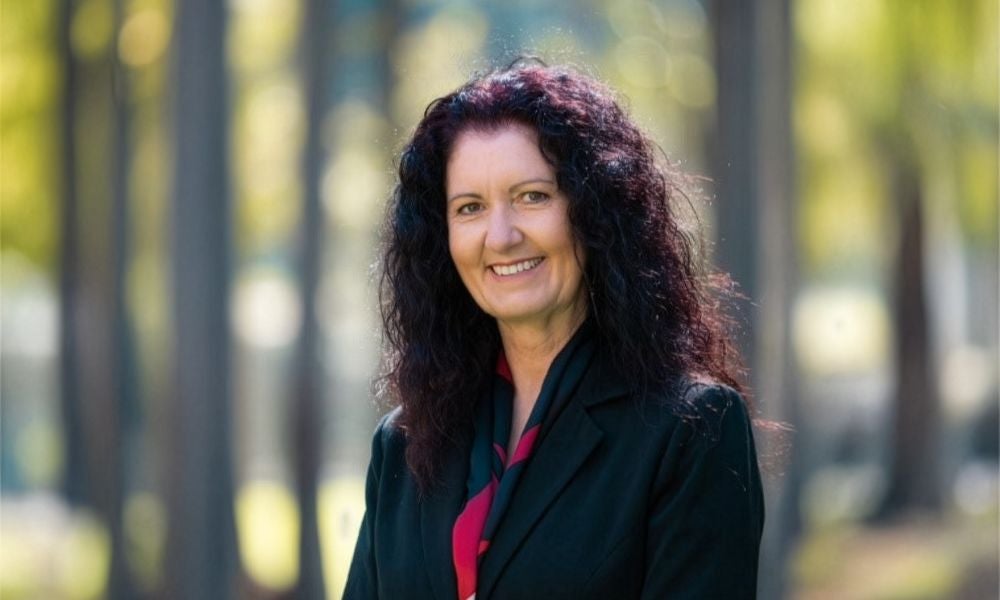
“We’ve had 50 years of navigating and redefining what self-determination looks like,” she says. “From the 1970s onwards, Aboriginal and Torres Strait Islander people were suddenly expected to run organisations and manage funding, even though many had been excluded from education altogether. Our communities had to build on the foundations of the strength and resilience our communities are known for.”
Today, those foundations are stronger and Indigenous women entrepreneurs are using them to reshape Australia’s business landscape for the better.
A non-linear path to economic self-determination
One of the most striking findings from the book is that Indigenous entrepreneurial journeys rarely follow linear paths. “For Indigenous peoples, success is not a straight line. Sometimes it means circling to the left and then circling to the right before you land where you’re meant to be,” says Prof. Holt.
This non-linear approach reflects the centrality of culture, kinship, responsibility, and reciprocity – values that often sit outside Western business frameworks. “A lot of the women we spoke to ground their businesses in cultural values and principles. Their enterprises are not just economic endeavours; they’re extensions of identity, community, and story,” she says.
Subscribe to BusinessThink for the latest research, analysis and insights from UNSW Business School
Entrepreneurship, then, becomes not only a commercial pathway but a social and cultural one. Many interviewees spoke of creating businesses specifically to give back to the community or to serve as role models for future generations. “We talk a lot in our communities about how you can’t be what you can’t see. These women are creating visibility and showing what’s possible. They’re demonstrating innovation, resilience, and cultural strength,” says Prof. Holt.
Breaking through structural barriers to economic self-determination
Despite this momentum, systemic barriers continue to constrain Indigenous enterprises, particularly those led by women.
One major challenge is regulatory inequity. Businesses registered under the Office of the Registrar of Indigenous Corporations (ORIC) are subject to more onerous reporting requirements than comparable non-Indigenous businesses. “There’s different legislation and different expectations. ORIC businesses often carry an additional regulatory burden, and that creates inequities right from the start,” says Prof. Holt.

These barriers extend beyond regulation into perception. Indigenous entrepreneurs frequently confront assumptions that their services should be provided for free or at discounted rates purely because they are Indigenous. “People often expect Aboriginal businesses to participate without proper remuneration. There’s a lack of appreciation for the value of their expertise and contributions compared to non-Indigenous providers,” she says.
The cumulative effect is a business ecosystem that often fails to recognise Indigenous women as innovators, leaders, and economic agents unless they fit the deficit-based narrative that has long framed Indigenous affairs.
Changing the narrative is the first step
For Prof. Holt, the biggest challenge today is not just funding or regulation, it is the story Australia tells about Indigenous people. “Too often our positionality has been based on an imposed history of trauma and dispossession. We need to shift the narrative toward our sovereignty, longevity, and cultural strength,” she says.
Such a shift would have positive ripple effects for policy, investment, and education. But if Indigenous communities continue to be positioned as victims, Prof. Holt warns that it then becomes even more challenging to build the economic engines necessary for genuine self-determination.
Learn more: Healing intergenerational trauma through meaningful work
“If we keep having aspirations only to ‘close the gap,’ we continue to position ourselves as victims. We need aspirations that move beyond that framing towards economic and social prosperity grounded in our strengths,” she says.
What First Nations people need to achieve economic prosperity are systems that recognise and support their strengths. In practical terms, this means investing in Indigenous innovation, removing structural barriers, and acknowledging Indigenous sovereignty within Australia’s economic landscape.
The role of universities and business in building more inclusive systems
Higher education has played a critical role in creating pathways for Indigenous participation in professional and commercial sectors, from the early “enclave” models of the 1970s and 80s through to today’s research centres and leadership programs.
Prof. Holt points to UNSW’s Indigenous Executive Leadership Program as an example of a successful initiative creating new possibilities. “A really high percentage of the participants are women. Programs like this build confidence, networks, and a sense of empowerment,” she says.

But universities and businesses must do more than train individuals; they must partner with Indigenous communities to remove structural barriers. “Our professors and experts need to work beside communities, bringing together academic and community expertise to advocate for change. We need to address the legislation and policies that are inequitable and work together to shift the trajectory,” she says.
This includes co-designing policy frameworks, investing in Indigenous-led ventures, and recognising Indigenous knowledge as an economic asset.
A call to action: enabling economic prosperity for all
For policymakers, investors, and business leaders, Prof. Holt says Australia must invest in systems that foster Indigenous agency, rather than reinforcing dependency.
“What we really need is funding, legislation, and law that works toward self-determination. We can’t continue to be positioned as victims. We need opportunities that bring more Indigenous women, and more Indigenous peoples, into pathways to success.”
Learn more: How to engage with Indigenous cultural and intellectual property: Terri Janke
The future Prof. Holt describes – one built on cultural strength, economic independence, and community-driven prosperity – is already emerging through the work of Indigenous women entrepreneurs. The task now for the broader community and business sector is to walk alongside them, amplify what is already working, and invest in the scaling of this success for all.