

No time to enjoy the extra: why bulk deals are losing older shoppers
New research explains why older customers walk past 'extra free' promotions, and shows two simple fixes that close the gap almost entirely
By 2030, the World Health Organization estimates that one in six people worldwide will be aged 60 or older. The spending power of this demographic is substantial: estimates suggest that consumers aged 50 to 70 will spend around US$7 trillion annually across a dozen major market segments. However, many companies miss the mark in marketing to older consumers, with products and campaigns usually built around youth-first assumptions.
For example, one common strategy retailers adopt is the “bonus pack”, in which a supermarket might offer two toothpaste deals side-by-side. One tag reads "20% price discount" while the other reads "25% more weight". For a shopper under 30, the two feel roughly interchangeable: more product or less cost. But for a shopper over 60, the choice is not so even – and the bonus pack loses.
This finding comes from a study of six experiments involving more than 1800 US and Hong Kong consumers, testing how age shapes people's responses to bulk promotions. In an online survey featuring a toothpaste ad, older participants rated the "25% more weight" version less favourably as their age increased, while their view of the discounted version barely changed. The same pattern held in a follow-up test with liquid hand soap and again in a real-world field study on a Hong Kong university campus, where 19.4% of older shoppers bought a toothpaste tube offering "20% more product" for the same price, compared with 33% of younger shoppers.

The research, No time to enjoy the extra! Aging and consumers' responses to volume-based sales promotions, was published in the Journal of the Academy of Marketing Science and authored by Dr Jiexian Chloe Huang from Newcastle University Business School, Dr Fei Katie Xu from Monash Business School, Dr Sophie Fan from UNSW Business School and Professor Yuwei Jiang from Hong Kong Polytechnic University.
“The research was sparked by a simple but important puzzle: while volume-based promotions are generally designed to appeal to consumers by offering ‘something extra’, this benefit may not be equally attractive to everyone, particularly older consumers, who may perceive themselves as having less time to consume the additional product,” said Dr Fan.
Why bulk offers and older shoppers don't mix
Marketers generally choose between two promotional levers: price cuts, which lower the cost of the same product, and volume deals, which add extra product for the same cost. The paper's authors argue that these two formats send different signals about when the benefit lands. A price discount saves money at the checkout, right now. A bonus pack only pays off once the extra quantity gets used, which takes time.
That difference in timing is where consumer age comes into play. The researchers point to what psychologists call “future time perspective”: How much time a person feels they have left to use, plan for or benefit from something. Older adults, the study finds, tend to view their remaining time as more limited than younger adults do – a pattern established in prior psychological research.
Subscribe for the latest research, analysis and insights from UNSW Business School
Statistical testing showed that this shortened time horizon – and not lower income, reduced materialism or a sense that bulk packs are wasteful – explains the gap in purchase intentions. As the authors put it, a limited future time perspective "leads older individuals to prioritise emotional satisfaction, stability, and the maintenance of wellbeing" ahead of goals that only pay off later.
“In practice, this means that an ‘extra 25% free’ label may feel less like a gain and more like a reminder that the benefit can only be realised through future use,” said Dr Fan. “Older shoppers may therefore be less inclined to buy a larger shampoo bottle, toothpaste pack or household product simply because it contains more product, even when the offer represents objectively better value.”
For retailers, she said the implication is that promotions aimed at older consumers may work better when they provide an immediate saving or present the extra item separately, for example, as a buy-one-get-one-free offer that can be shared or given to someone else.
Two ways to close the gap
The research found that two product design choices can close the age gap.
The first is the packaging format. When the extra product was bundled into a single larger container, older shoppers avoided it. When the same volume was split into two separate, identical items (a buy-one-get-one-free structure rather than a single oversized pack) the age effect disappeared. In a lucky-draw experiment using shampoo, only 19.1% of older adults opted in under the bundled format, against 56.6% of younger adults. Under the separated format, the gap closed to 42.1% versus 51.5%. The authors suggest separable formats read as more useful for sharing or giving, which shifts the reward from something abstract and future-facing to something immediate and social.
"For older customer segments, immediate price discounts may be more effective because the financial benefit is realised at the point of purchase"
SOPHIE FAN
The second lever is who the purchase is for. When older participants imagined buying almonds for a friend rather than themselves, their reluctance towards the bulk offer vanished entirely, with purchase intentions matching those of younger adults almost exactly. In buying for someone else, the paper notes: "Consumers tend to maximise perceived utility for the recipient," and a larger quantity signals generosity rather than clutter.
What this means for marketers
For companies looking to market to a mature customer base, the research offers practical insights. A blanket bonus-pack strategy will underperform with older shoppers, even when the offer is objectively better value than a price cut. Splitting the extra volume into a separate, shareable unit rather than a single oversized container is a fix supported by the data. Framing bulk offers around gifting occasions, festivals, or family provisioning is another approach, since research shows that reluctance largely disappears once personal consumption is no longer the focus.
However, none of this applies neatly to every category. The study was built around routine, functional products (toothpaste, soap, shampoo, almonds), so its authors flag that indulgence-driven purchases may behave differently, since immediate enjoyment could offset the same hesitation. For retailers and category managers in industries where older customers already hold buying power (health, beauty, travel, retail), the finding offers a specific, testable reason why a widely used tactic is losing market share, as well as two concrete ways to fix it.
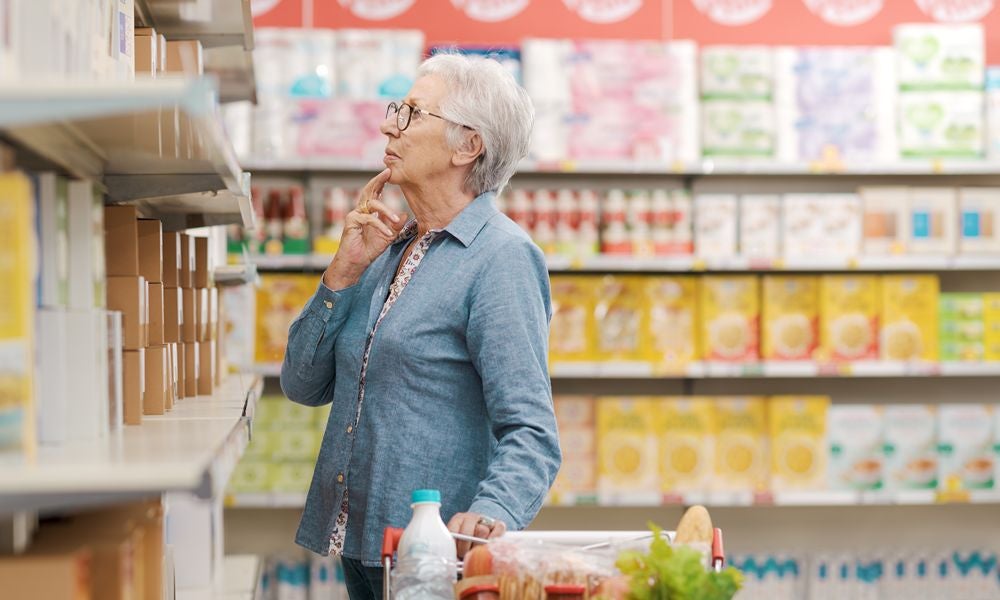
“Marketers should not assume that volume-based promotions, such as ‘25% extra free’, will appeal equally to consumers of all ages,” said Dr Fan. “For older customer segments, immediate price discounts may be more effective because the financial benefit is realised at the point of purchase.”
Where extra-volume offers are used, presenting the additional product separately (such as through buy-one-get-one-free promotions) can make the value feel more flexible and easier to share. Retailers can also frame these promotions around gifting, family use or social occasions, helping the extra product deliver an immediate social or emotional benefit, Dr Fan explained.
“Finally, firms should test promotion types by customer age and product category, particularly in markets such as healthcare, beauty, leisure and retail where older consumers are an important and growing customer group,” Dr Fan concluded.
Five recommendations for industry professionals
- Retail and category managers should test price discounts against volume promotions rather than assuming equal monetary value produces the same customer response.
- Pricing and promotion teams should analyse promotion performance by customer age where data and consent permit, particularly in categories with substantial spending from older consumers.
- Packaging teams should test whether an extra quantity performs better as an additional unit rather than as an increase within a single container.
- Marketing teams should test gifting, sharing and family-purchase contexts when using volume promotions for markets with older consumers.
- Consumer insights teams should treat age as one variable in promotion testing rather than assuming the findings apply to every person or product category.