

Five ways the “Black Summer” bushfires undermined collaboration
Research into the “Black Summer” bushfires examines how complex disasters can overwhelm coordinated responses and how organisations can respond effectively
Disasters now cost the world more than US$2.3 trillion a year, once cascading, and ecosystem impacts are accounted for, according to the UN Office for Disaster Risk Reduction. In Australia, the bill for extreme weather events incurred over the past five years has jumped by 67% on the five years before that, according to the Insurance Council of Australia. Echoing a recent Financial Times analysis of the rise of interconnected global crises, these escalating costs point to the growing challenge of managing disasters whose cascading effects extend far beyond the incident itself.
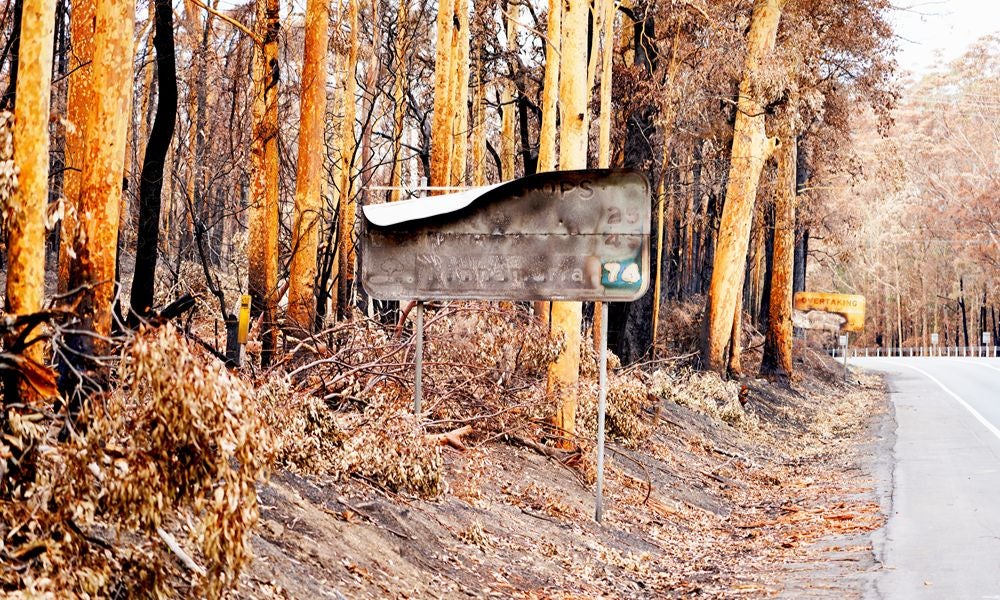
The 2019/2020 “Black Summer” bushfires are the clearest illustration yet of what this trend looks like in reality, and of how underprepared existing crisis response systems are to meet it. The numbers from that disastrous summer are familiar to most Australians: 24 million hectares burnt, 33 lives lost, more than 3000 homes destroyed. It has been estimated that the fires caused nearly $100 billion in economic losses and property damage, making them the costliest natural disaster in Australia’s history.
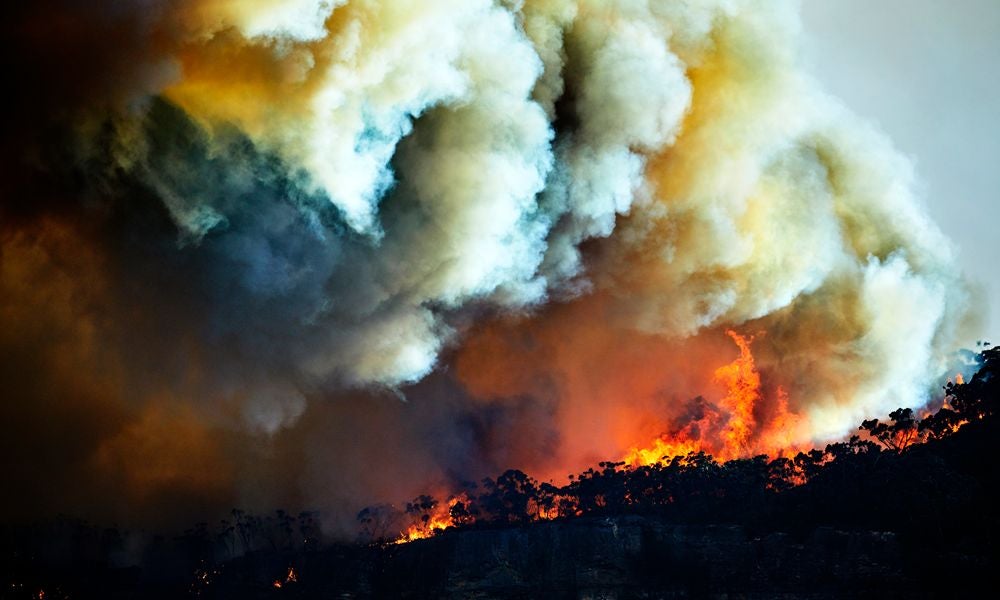
What this figure doesn’t capture is how such a crisis can overwhelm carefully planned emergency responses and the organisations responsible for executing them. That is the gap that research from UNSW Sydney and international collaborators seeks to explore, offering insights for any organisation that has to coordinate people, resources, and decisions across boundaries under pressure.
Published in the highly regarded Journal of Management Studies, the research draws on 62 interviews with fire chiefs, incident controllers, Australian Defence Force personnel, police, government officials, NGOs and community groups involved in the Black Summer response. It identifies five ways that the crisis put strain on Australia’s collaborative governance arrangements: the formal systems designed to get agencies, jurisdictions and levels of government working together under pressure.
The paper, titled Understanding and Addressing the Disruptive Impacts of Contemporary Climate Crises, is authored by UNSW Business School’s Dr Jaco Fourie and Professor Markus Hoellerer, together with Vienna University of Economics and Business’ Professors Renate Meyer and Martin Kornberger, the University of Liverpool’s Professor Dennis Jancsary, Trinity College Dublin’s Associate Professor Graham Dwyer, and The University of Queensland’s Professor Paul Spee.
Learn more: Home insurance tips for bushfire season: loopholes to avoid
“Our research was motivated by the very experiences of many of our team living through the 2019/2020 bushfires,” said project lead, Prof. Hoellerer. “As researchers, we were struck not only by the scale and intensity, but also by the way they challenged Australia’s highly developed response systems that are widely regarded as world-leading. Indeed, the Black Summer revealed how even sophisticated institutional arrangements can struggle when confronted with climate-driven events of such magnitude.
“We were eager to fully understand what these disruptions mean for organisations and governance systems, and to explore how societies can better prepare for, and respond to, the increasingly complex challenges posed by contemporary climate crises.”
The problem: systems built for routine disasters
Australia’s crisis governance rests on three things: clear chains of authority setting out who is in charge; communication systems that build a shared picture of events; and resource-sharing arrangements that move people and equipment where needed. States apply these through the AIIMS framework (the Australasian Inter-Service Incident Management System), backed by national bodies that coordinate aerial firefighting and resource sharing between states.
While these arrangements are widely regarded as robust, they were developed primarily in the context of crises that are typically more local, short-lived, or staggered across regions. During the Black Summer, fires broke out in Queensland in September 2019 and, by January 2020, had spread across five states and territories at once, drawing in the Australian Defence Force, the Red Cross, community groups and international crews from the United States, Canada and New Zealand.

“What made the Black Summer so significant was not that Australia's emergency management system failed,” said Dr Fourie, who also serves as chief investigator for the UNSW Institute for Climate Risk & Response.
“Rather, it was that a highly capable system was confronted with conditions beyond those for which it had been routinely tested. The crisis created simultaneous demands across multiple jurisdictions and agencies, making it difficult to maintain the clear chains of command, information flows and resource-sharing arrangements that normally underpin effective emergency response.”
Five ways the system strained under pressure
As fires broke out everywhere (instead of moving down the coast in stages as is usual), resource sharing arrangements built for staged support gave way – a mechanism the researchers denoted as “stretching”. One respondent explained: "I think what was unprecedented was the multi-jurisdictional nature of it. So we saw it beginning in Queensland, and then it moved down the coast, affecting practically every state except the Northern Territory in that immediate sort of impact."
This strain pushed inexperienced staff into leadership roles before they were ready, and sent firefighters into unfamiliar terrain with unfamiliar teams, in what one respondent called "unwilling marriages".
"Our framework helps practitioners anticipate where coordination is likely to break down and adjust before a crisis response becomes fragmented and less collaborative"
GRAHAM DWYER
Simultaneously, “blurring” occurred. As fires increasingly overlapped, nobody was sure who was responsible for what. One respondent described being told they were accountable for a fire 200 kilometres away, with no way of monitoring it. The line between response, relief and recovery blurred too, since fires kept moving before agencies could hand over from one phase to the next.
In addition, “fracturing” hit communication and information systems. These were built on a state-by-state basis and broke down as fires crossed state borders. "It's kind of weird to think that we've got imaginary lines in the ground, and it's like, you've stepped over the line, and now you're in a different state," one respondent in Victoria said. “So, there was no integration."
The fourth mechanism, “ossifying”, describes how agencies and other organisations retreated to protect their own priorities in response to stretching, blurring, and fracturing. State leaders, for example, prioritised their own jurisdiction over national coordination. One respondent explained: "It was almost like nobody wanted to compromise. We may as well have been seven different nations.” Agencies reduced information sharing across organisational lines, and command structures meant to be flexible were instead applied in a more rigid, top-down manner.
Finally, “improvising” saw new groups and processes spring up in attempts to fill gaps created by ossifying – mostly without coordination. For example, many emergent community groups duplicated services already delivered by established recovery agencies, adding confusion for affected communities, and federal authorities established new coordination forums that duplicated decisions already made at the state level.
Why following the plan can backfire (and how to prevent this in the future)
Prioritising, sticking to core competencies, focusing on local priorities, and following established procedures are usually sound crisis management practices. The research found, however, that under extreme complexity, these same instincts hardened the divisions that needed to be bridged among responders. Focusing on what you can control locally works when a crisis is contained. When the crisis outgrows the boundaries the organisation was built around, that same instinct starves the response of the coordination it needs.
“The lesson isn’t that plans are useless,” said research co-author, A/Prof. Dwyer. “In fact, strong governance arrangements remain quintessential. The challenge is that as crises become larger, longer, more interconnected, and thus more complex, those arrangements are exposed to unusual pressures. Our framework helps practitioners anticipate where coordination is likely to break down and adjust before a crisis response becomes fragmented and less collaborative.”
What this means for business
While this research focuses on bushfire response, the mechanisms the researchers describe apply to any organisation managing a crisis that spans multiple teams, functions or jurisdictions at once, from a supply chain disruption to a cyber incident affecting several business units. Their main finding is that a perfectly designed governance system is not achievable. A more realistic goal is building the capacity to coordinate improvisation when it happens, so that ad hoc responses reinforce the plan rather than duplicate or undermine it.
Subscribe for the latest research, analysis and insights from UNSW Business School
For businesses, that means building surge capacity ahead of time (drawing together people with the right experience before a crisis, not during one) and creating channels for cross-team information sharing that do not collapse under pressure.
And with natural disaster costs in Australia forecast to keep rising, understanding where and how these breakdowns occur is the first step towards responses that can keep pace with them. “Many organisations prepare for the crisis they expect – not the ones they will get in a climate-changed era,” said Dr Fourie.
“Our findings show that as crises become more complex, even well-designed systems can come under pressure. The goal shouldn’t be to eliminate improvisation, which is impossible, but to build the capacity to coordinate it. Organisations that can do that will be far better positioned to respond to the disruptions of a climate-changed future.”
10 recommendations for industry professionals
- Boards and risk committees: Test whether crisis plans cover disruptions across business units, suppliers, jurisdictions, and external response partners, rather than within a single function.
- Executives: Define which decisions remain within business units and which move to an organisation-wide coordination group when disruption crosses agreed thresholds.
- Chief risk officers: Map where authority, information and resource-sharing arrangements could fail when several incidents or business impacts occur at the same time.
- Business continuity leaders: Build a register of personnel who can fill surge roles and record the experience, authority and training required for each role.
- Chief information officers: Establish information channels that allow teams to maintain a shared operating picture when primary platforms, reporting lines or business units become disconnected.
- Cybersecurity leaders: Coordinate technical response, business operations, communications, legal work and customer support through one incident structure while preserving role accountability.
- Supply chain leaders: Identify where local decisions to protect one market, supplier or division could reduce resources or information available to the wider organisation.
- HR leaders: Prepare employees for temporary crisis roles and ensure assigned personnel have the authority, training, and support needed to perform them.
- Communications leaders: Create procedures to reconcile reports from teams, partners, and jurisdictions before distributing information to employees, customers, or the public.
- Emergency and resilience managers: Develop a process to register, assess, and connect new groups, resources, and response activities to the operational response.