

The retirement knowledge gap costing workers their savings
Wharton Professor Olivia S. Mitchell says more people are turning to AI for retirement advice, but it cannot replace the human judgement financial decisions still require
Retirement systems around the world were designed decades ago, when people did not live as long and tended to stay with one employer for most of their working life. Populations are ageing, fertility rates have fallen well below replacement level in many countries, and the gap between what people need to know to plan their own retirement and what they actually know has moved from an academic question to a policy one. At the same time, a growing share of people are turning to AI for guidance on saving, investing and drawing down retirement savings, often without a way to judge whether the answer they get back is right.
Professor Olivia S. Mitchell from the Wharton School at the University of Pennsylvania has spent many years studying this topic. Prof. Mitchell, who also runs Wharton’s Pension Research Council and has worked on social security and pension systems in the United States, Australia, Chile and Japan (among other countries), was recently interviewed by UNSW Business School’s Professor Karin Sanders, Deputy Dean (Research & Enterprise), and Associate Professor Yang Shen in the School of Risk and Actuarial Studies.
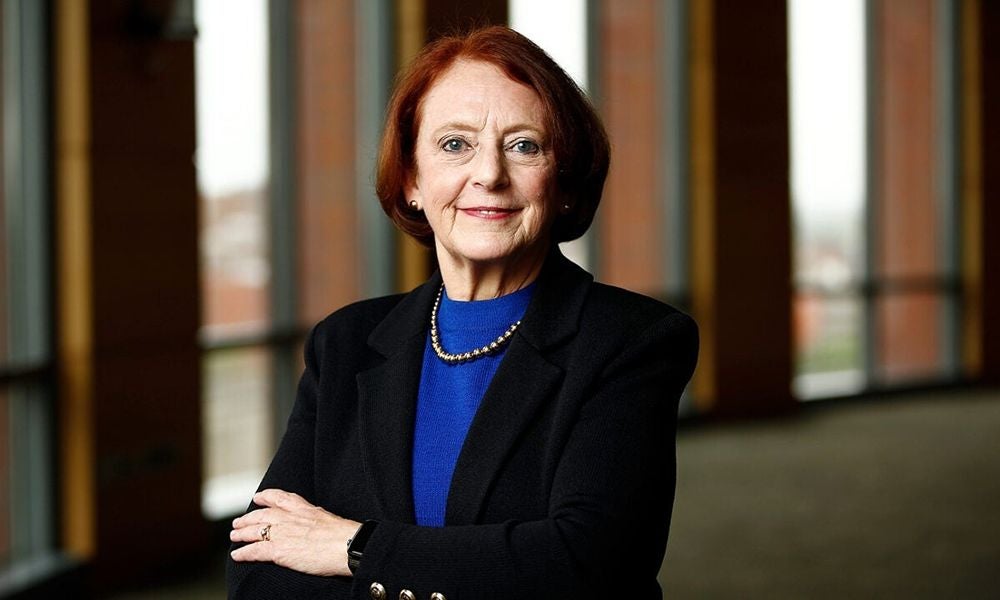
They discussed the use of AI in retirement planning, the behavioural factors that shape financial decisions, the gender gap in financial literacy, and the policy reforms needed as populations age worldwide.
Prof. Sanders: Are there enough academics working on ageing and retirement issues?
Prof. Mitchell: I work tirelessly to encourage young people to enter this field. Around 30 years ago, there was a great deal of interest in the topic. Nowadays, it’s less top of mind, but with population ageing and the demographic changes we’re experiencing, it demands more attention.
A/Prof. Shen: Do you think AI offers people an opportunity to improve their financial literacy, or does it introduce a new set of problems?
Prof. Mitchell: The development of AI has been amazing. Today, as many as half of people in the developed world are consulting AI about how to save, to invest, and to draw down their retirement accounts. My concern is that AI makes mistakes, just as people do, so I’d suggest that people consult a range of AI platforms to see if they agree or disagree, and why.
I believe AI is both an advantage and a limitation. People with very little wealth and income can consult AI quite inexpensively, but they don’t get the human touch many people need when making decisions about spending, saving, retirement timing, and withdrawals.
Learn more: Is self-control the biggest challenge facing pension systems?
Prof. Sanders: Your work brings a psychology background into economic modelling of retirement decisions. How has that changed the field?
Prof. Mitchell: Conventional economic models assume individuals are perfectly rational and can optimally decide how much to save and invest, when to retire, and how to spend in older age. Behavioural economics has shown that people do not always behave rationally. We’ve learned that factors such as information overload, inertia, and framing affect saving, investment, and retirement choices. This helps us understand why people save too little, fail to diversify their investments, delay important decisions, and struggle with financial complexity.
Prof. Sanders: What do you see as the main policy impact of your work?
Prof. Mitchell: My work has concentrated on helping policymakers and consumers understand how retirement systems, both public and private, influence behaviour and retirement security. I’m also proud of my research on financial literacy, which has highlighted the importance of equipping people with the knowledge they need to make informed financial decisions.
"In every country I’ve examined, women are less financially literate than men"
OLIVIA S MITCHELL
Prof. Sanders: In Australia, our fertility rate is 1.4, well below the replacement rate of 2.1. With ageing populations placing pressure on retirement systems worldwide, which reforms are most needed?
Prof. Mitchell: Traditionally, retirement systems around the world haven’t adapted to longer life expectancies while still maintaining adequate benefits for vulnerable populations. Policies that encourage saving and improve coverage, especially in developing countries, and strengthen financial literacy, will become increasingly important as populations age.
Prof. Sanders: Women tend to live longer and have less income than men. What should be done differently for women in retirement planning?
Prof. Mitchell: In every country I’ve examined, women are less financially literate than men. In my research, we’ve been following a cohort of older people over time and have documented that financial literacy declines by about 1 percentage point per year. Yet because women live longer, they’re more likely to be making financial decisions with less financial ability in later life. That’s part of why I’ve been trying to boost financial literacy among women and make sure they have better coverage for lifetime income in retirement.
Subscribe for the latest research, analysis and insights from UNSW Business School
Prof. Sanders: So it’s a combination: women live longer, have less financial knowledge, and, in general, face worse retirement provisions than men. How can financial literacy be improved through education and training?
Prof. Mitchell: In the United States, 39 states have now mandated that personal finance be taught in high school. It is also evident that, in those states, young adults who received this training make better planning and saving decisions. Employers also have an incentive to provide workplace financial literacy because it reduces stress for employees who are otherwise getting calls from credit card companies and increases productivity when employers play a role, too.
Prof. Sanders: I like the idea of doing this in schools, but that’s a long time coming. Is there something we can do as we get closer to retirement age, given that financial literacy declines with age?
Prof. Mitchell: Employers can help not only when workers join the company, but also as they move through their careers, by educating them about the importance of diversification and inflation. And as employees near retirement, employers can help them consider what resources they have available. In the US and Australia, there’s a movement afoot to encourage a default arrangement in which, if employees don’t choose how to manage their money in retirement, they are defaulted into a lifetime income stream: this is essential to ensure retirees don’t run out of money later in life.
"Most of us systematically underestimate how long we will live, which means we save too little, spend too much, and end up with no money in old age"
OLIVIA S MITCHELL
Prof. Sanders: What do you think is the best definition of an impactful academic?
Prof. Mitchell: Research is most impactful when it changes the way people think. Some of the most influential studies are those that challenge conventional wisdom and open up new areas of inquiry. Moreover, they speak to real-world challenges and inform public debate and policy. Research doesn’t always have an immediate impact; sometimes it gains influence over many years, as it shapes future scholarship. Research will have the broadest impact when scholars can communicate their findings effectively to non-academic audiences.
Prof. Sanders: What’s your view on the relationship between academic and societal impact?
Prof. Mitchell: Through the Pension Research Council at the Wharton School, I’ve sought to create a forum where academics, industry leaders, and policymakers can propose, explore, and exchange ideas. Some of the most influential research emerges when scholars understand the practical challenges facing decision-makers, employers, and industry, so it is imperative to engage with these players, understand their challenges, conduct the research, and bring it back to them in turn.
Learn more: How are socio-economic factors linked to life expectancy gaps?
Prof. Sanders: Looking back at your career, what was most rewarding, and what’s your advice for junior academics in this field?
Prof. Mitchell: One of my most rewarding experiences has been seeing financial literacy move from a niche academic topic to a central policy concern around the world. Research I’ve conducted with colleagues has helped demonstrate that many people lack financial knowledge, and that gap has critical consequences for retirement security. I’ve also worked on social security pensions at retirement, including in Australia, Chile, Japan, the US, and elsewhere, and it’s been deeply rewarding to see this research contribute to better retirement outcomes for real people.
My advice to early-career researchers is to focus on important questions, develop strong methodological skills, and remain open to interdisciplinary collaboration. The most influential research often comes from combining rigorous analysis with a genuine commitment to addressing real-world challenges, and clear communication is just as important as technical excellence when translating research into action.
A/Prof. Shen: Do you have any suggestions on which important questions young researchers, or anyone working in this field, should focus on at the moment?
Prof. Mitchell: Something I’ve been looking at lately is the gap between what people know, what they think they know, and the reality, particularly around longevity expectations. Most of us systematically underestimate how long we will live, which means we save too little, spend too much, and end up with no money in old age. If we can close that gap between expectations and reality, people are much more likely to save more, invest more sensibly, and purchase lifetime income products.