

New work, old risks: why are people still dying on the job?
Poor risk assessment, production pressure and weak worker voice still drive workplace deaths, as precarious work and new technologies create fresh hazards
Australia has become much better at preventing people from being killed at work. But progress has not eliminated the underlying failures that cause workplace deaths – and new forms of work are creating new ways for those failures to emerge.
“The workplace is always changing, and those changes introduce problems,” says UNSW Business School Emeritus Professor Michael Quinlan, who has spent more than four decades studying work health and safety (WHS), workplace regulation and the causes of industrial disasters. He is also chair of the SafeWork NSW Advisory Council, which brings industry, unions and others together to advise the Minister and SafeWork NSW (the regulator) on WHS, including emerging risks, and which Prof. Quinlan said should contribute to making NSW workplaces in the future.
Turning to the question of why people continue to die or be seriously harmed at work, Professor Quinlan made a number of observations, emphasising these were his personal views, not those of the Advisory Council. Some of those problems are familiar: inadequate planning, poorly designed systems, production pressures and failures to act on early warnings. Others are emerging as work becomes more precarious, more technologically complex, and less tied to a single workplace or employer.
The good news, he says, is that far fewer people are dying at work than in the past. Australia has benefited from stronger legislation, greater union involvement and more effective worker representation.
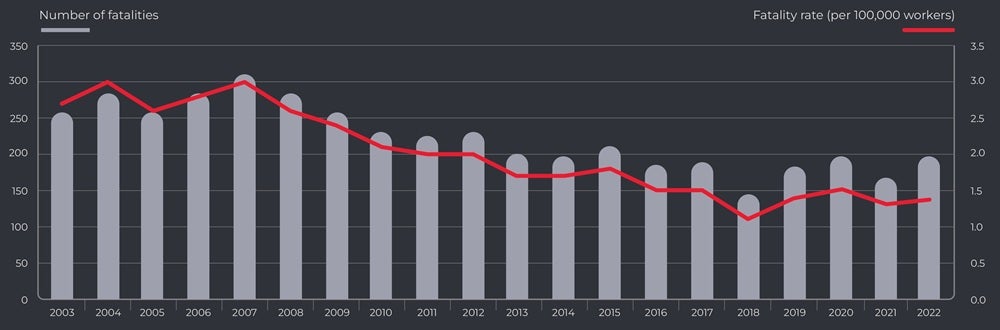
Its workplace safety record is also better than that of some comparable countries: more than twice as many people die on the job in the United States.
Those gains were not accidental; they were the result of planning, regulation and decades of political and industrial effort. But workplace injuries and deaths are still occurring, and the reasons can be frustratingly familiar. “People still die for the same reasons they died in the past: failures in engineering, design and maintenance at work; failure to take account of risk warning signals,” Prof. Quinlan says.
Australia’s health and safety laws are strongly risk-based, he says, but organisations still fail to assess risks properly. Systems break down, audits are inadequate, production pressures sometimes take precedence over safety, and workers’ concerns are ignored. Emergency procedures sometimes fail to account for what happens “when everything goes pear-shaped” in a carefully planned operation.
“Is there any backup plan that keeps people safe?” he asks. “Those are the general failures, and there are new challenges.”
The new minimum standards for food-delivery workers bring one of those challenges into focus: whether improving pay and conditions for people in precarious work can also reduce the pressure to work longer, faster and less safely.
The risks we still miss
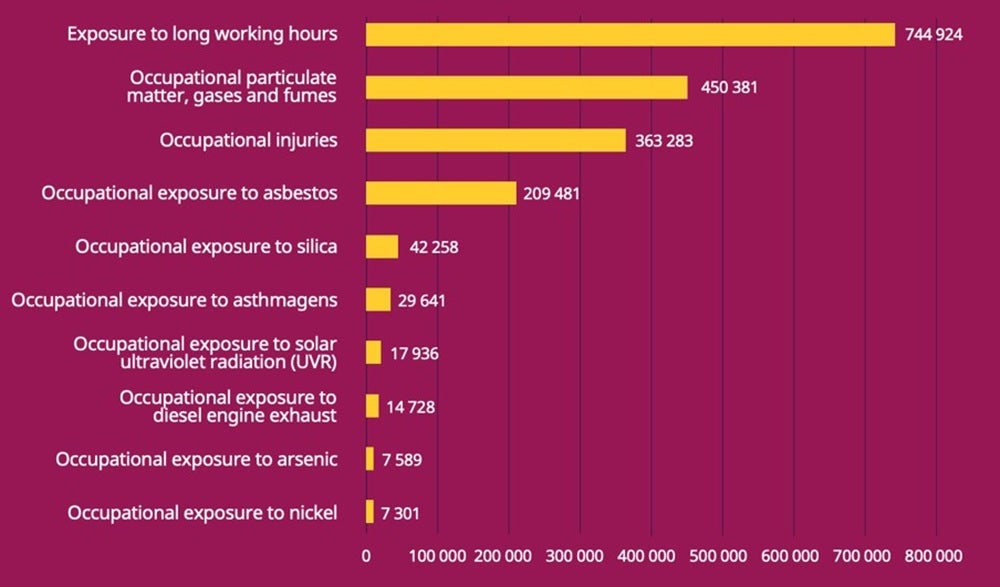
Workplace deaths are not limited to traumatic incidents. Australia has become better at preventing some injuries, but deaths caused by disease and hazardous substances remain a major problem, and they are more difficult to see in the data.
At the beginning of his career, Prof. Quinlan says, about six times as many workers died from disease and hazardous substances as died from traumatic injuries. Today, he estimates the ratio may be closer to 10, partly because progress in preventing traumatic injuries has not been matched by progress in disease prevention, though there are positive developments, such as the ban on engineered stone, where Australia led the world.
Lead, diesel fumes and nanoparticles are among the hazards that remain poorly addressed. The health effects of high-pressure work, long hours and irregular shifts can also take years to emerge.
“If you put workers into highly stressful work situations, and they’re working harder, that will kill people in the longer term,” he says. There are strong connections between high-pressure workplaces and higher levels of heart disease, he says, while a 24/7 economy is exposing more workers to the health risks associated with working outside standard daytime hours.
These risks are particularly relevant to precarious workers, including gig workers, contractors and labour-hire employees. The evidence is clear that their health and safety outcomes are often worse, Prof. Quinlan says, because they face greater economic pressure, weaker regulation and more difficulty reporting concerns. “They’re afraid to report things,” he says.
The relationship between work arrangements and safety is at the centre of a new national debate over minimum standards for gig workers. From 17 August, food-delivery workers engaged through digital platforms have been covered by a Fair Work Commission order setting a minimum earnings floor based on engaged time, with rates initially ranging from $31.30 an hour for bicycle and scooter riders to $32 for workers using a car or van. The order also includes provisions on insurance, dispute resolution, consultation and workplace delegates’ rights.
The new standards are a significant development, Prof. Quinlan says. Pay is only one part of the safety picture. Workers paid by the delivery, kilometre, or piece can face pressure to work longer hours, skip breaks, or take risks to earn enough money.
“You can’t have a safe workplace if you’re not giving people decent pay,” he says. “If they don’t get decent pay, they will either work too many hours or they’ll find other ways of cutting corners, which can harm safety or their own health.”
Why worker voice matters
Australia’s work health and safety laws have important strengths: they are focused on workers, not simply employees, and the legislation’s broad duty falls on a “person conducting a business or undertaking”, or PCBU. That can include not only an employer but also a manufacturer, designer, importer, supplier, or other party whose decisions affect health and safety.
In principle, this means responsibility cannot simply be passed down a supply chain or avoided because a worker is labelled a contractor. But legal coverage does not automatically create a safe workplace.
Workers also need a meaningful way to raise concerns, Prof. Quinlan says. That is where safety representatives can make a difference, particularly when workers worry that speaking up could cost them their jobs.
The mining industry provides a useful example. In a recent report commissioned by the NSW Mine Workers Alliance, Prof. Quinlan and his co-authors examined safety representation across the state’s coal and metalliferous mines, drawing on incident data, regulatory records, and interviews with workers and representatives. They found that coal mining’s stronger system of site and industry representatives gave workers a more effective voice and helped identify serious hazards before they resulted in deaths or injuries.
“It’s quite clear that one of the reasons coal mining is safe in Australia is because it has very strong safety representatives,” he says.
The contrast with metalliferous mining in NSW is significant. When the industry-level representatives were removed, the safety record deteriorated, Prof. Quinlan says. His research found that the representative structure in coal mining was more robust, with representatives able to support workers who might otherwise feel isolated or vulnerable.
The model could be useful in other high-risk industries, he says, although the structure would need to reflect the nature of the work.
Fear of reprisal does not have to be widespread to affect behaviour, and “it doesn’t matter if the fear is exaggerated”, Prof. Quinlan says. “It will still affect people’s behaviour, and they only have to be aware of one or two cases where somebody has been victimised for it to have a chilling effect.”
Learn more: Tragedy repeating itself? Lessons from the Dreamworld disaster
That fear can be particularly acute for agency workers and labour-hire employees, who may be removed from a job without cause. After the 2020 explosion at Queensland’s Grosvenor coal mine, only one labour-hire worker was prepared to give evidence to the inquiry, he recalls.
The issue is not whether contractors should be used at all – they can bring valuable specialist skills, particularly for heavy or non-routine maintenance. The problem arises when routine production or maintenance work is given to inexperienced or temporary workers without proper induction, mentoring and support.
“You need proper induction and training systems, not just online quizzes,” Prof. Quinlan says. “You need to take time, like having a mentor, so that an inexperienced worker can work alongside a more experienced worker and learn the ropes.”
The failure before the failure
Prof. Quinlan’s work is shaped by what he calls the “Ten Pathways” to death and disaster: recurring failures that can be identified across industries and incidents. They include poor design and engineering, inadequate maintenance, failures to learn from warning signs, production pressure, weak supervision, ineffective risk assessment and regulatory shortcomings.
Research by Dr Heather Jackson from the University of Newcastle into 51 fatal, serious-injury and high-potential incidents in NSW coal and metalliferous mining found failures in design, engineering or maintenance in all but one of the fatal incidents. That means the failure often happens long before the final event.
“People go on about culture and training, but if you don’t get your systems right first, then training won’t make a difference,” Prof. Quinlan says. “Culture is about leadership and about what the employer does. In my view, it’s a symptom, not an underlying cause.”
"It’s quite clear that one of the reasons coal mining is safe in Australia is because it has very strong safety representatives"
MICHAEL QUINLAN
That distinction matters because safety culture can become a convenient explanation for incidents that should have prompted scrutiny of the system itself. A worker may make an error, but the more important questions are whether the equipment was designed safely, whether the worker was properly trained and supervised, whether production pressures encouraged a shortcut, and whether earlier warnings were acted on.
Risk assessments are only useful if they identify the hazards that workers will actually face, and if the resulting controls are checked in practice. Prof. Quinlan argues that workplaces should monitor their systems regularly and that high-hazard workplaces should be independently audited at least every three years to determine whether what is happening matches the paperwork.
“The systems are only good if your risk assessment in the first place is thorough and you’ve looked at all the hazards,” he says. “You’ve designed a system that addresses those hazards, and you audit it.”
New technology, old mistakes
The nature of work is also changing faster than safety systems can adapt.
Artificial intelligence and algorithmic management can create psychosocial risks by making work more stressful and the underlying priorities more opaque, but Prof. Quinlan says the risks are not only psychological. New technologies can introduce physical hazards when they are implemented without adequate assessment.
Automated vehicles at mine sites, for example, may be separated from manually operated vehicles, but the way they are used can create less visible problems. Running automated equipment at high speed can damage roads, creating corrugations and vibration that affect manual drivers. Prof. Quinlan cites a case in which a driver’s coccyx was fractured by vibration.
“There are all these hidden issues which people don’t even think about,” he says.
Subscribe for the latest research, analysis and insights from UNSW Business School
Digital systems can also be used to prevent collisions and improve monitoring, but those benefits will not necessarily emerge without regulation or incentives. Companies are more likely to invest in safety features when they can see an immediate productivity benefit, Prof. Quinlan says.
That makes it important to assess work systems before they are introduced, rather than waiting for the consequences to become visible.
NSW’s Digital Work Systems Act is a promising development, he says. The legislation broadly defines digital work systems and, in some circumstances, gives authorised union officials access to algorithms. But Prof. Quinlan is concerned that broader AI regulation focuses on product safety, whereas these technologies are implemented in myriad ways, and workplace health and safety regulation is accordingly more process-oriented.
There is also often a considerable lag between the emergence of hazards and a regulatory response. “We’ve got to start doing more risk assessment before work systems come in,” he said.
Can regulation catch up?
The new minimum standards for food-delivery workers offer an opportunity to test whether changing the economic conditions of work can improve health and safety.
Prof. Quinlan is involved in a study, led by researchers at the University of Adelaide, that aims to measure the impact of the new standards on gig workers’ mental health and wellbeing. The researchers have conducted baseline interviews and plan to carry out further surveys after the new conditions have been in place for some time.
That evidence-based approach is one of the strengths of Australia’s industrial relations system, Prof. Quinlan says. Industry-wide rules can prevent individual businesses from being undercut by competitors that choose not to meet higher standards.

The new food-delivery standards were jointly pursued by the Transport Workers’ Union and major platforms, including Uber and DoorDash. The platforms were interested in shaping the rules, Prof. Quinlan says, but also wanted competitors to be subject to the same baseline.
Australia’s history shows that minimum standards do not necessarily hurt industries, he says. When minimum wages were introduced in the early 20th century, critics warned that small businesses would fail. This didn’t happen. Instead, the standards helped eliminate child labour by reducing the pressure on families to send children out to work. “Industrial relations legislation sets a baseline on which you can build health and safety,” Prof. Quinlan says.
The challenge is to ensure the baseline keeps pace with changes in how work is organised. Gig platforms, subcontracting, automation and AI may look like new problems, but they often reproduce older patterns: economic pressure, weak worker voice, inadequate planning and a failure to act on warning signs.
Australia has learned how to reduce workplace deaths. The question is whether it will apply those lessons before new systems and new forms of work create another body of evidence.