

How care, pay and policy shape women’s superannuation
Policy, industry and research leaders discuss how care, pay, financial abuse and data sharing affect women’s retirement income and superannuation
The gender gap in superannuation usually opens in women's 20s and 30s, when many move from full-time to part-time work as caring responsibilities increase, according to Finance Minister Katy Gallagher. "One of the key areas is trying to ensure that women are paid properly for the work that they do, because we know that improving wages is the single biggest thing we can do to improve women's retirement incomes," said Senator Gallagher, who is also Minister for Women.
She pointed to the gender undervaluation case before the Fair Work Commission and to the pay rises the government had delivered for workers in aged care and early education and care, which she said would flow through to women's superannuation over time.
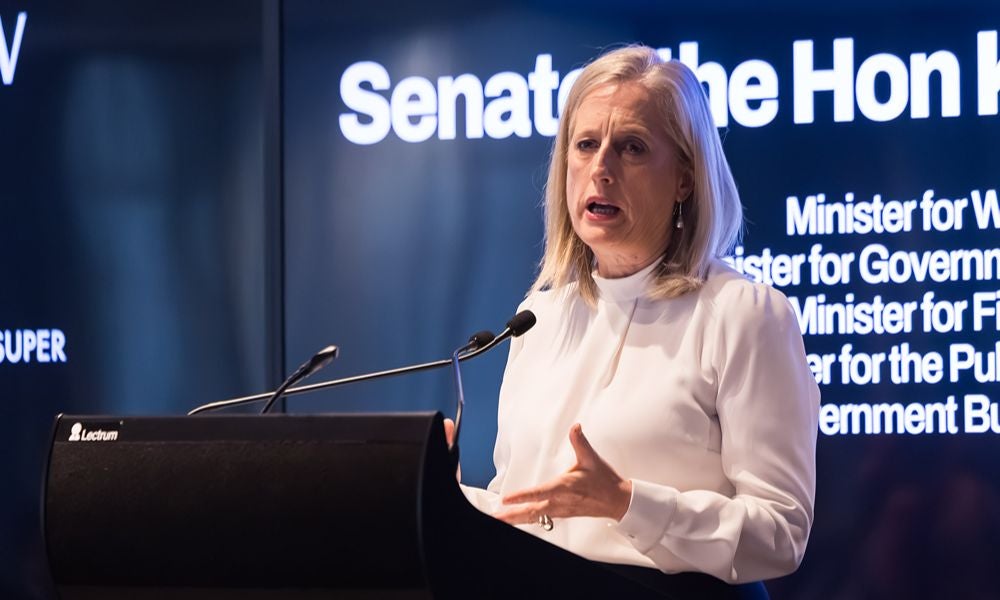
Senator Gallagher was speaking at the Superannuation, Gender Equity and Financial Safety forum, hosted by CareSuper, UNSW Sydney, Business Sydney and Women in Super as part of UNSW's Progress Partners initiative, which connects organisations with UNSW expertise and cross-sector networks to tackle complex societal, economic and industry challenges – the first of which is reducing financial abuse in Australia.
With millions of Australians expected to retire over the next decade, the forum considered how the $4.4 trillion superannuation system could deliver fairer outcomes for women. Experts discussed the role employers, business leaders and superannuation funds could play in closing the gender gap and strengthening women’s financial futures.
Superannuation on paid parental leave
Minister Gallagher said when the economy worked for women, it worked for everybody. “Improving wages is the single biggest thing we can do to improve women’s retirement incomes,” she said.
The government extended paid parental leave, ensured second parents could take a share of it, and began paying super on the Commonwealth scheme, which Senator Gallagher said had been the only employment condition that did not require super to be paid.
Learn more: How to identify and support women facing economic abuse
It also changed the threshold for the low-income superannuation tax offset, as Women in Super and the Super Members Council had sought, and introduced payday super so contributions reached workers' accounts when they were due.
"Obviously, the pushback on super is real. It's always been a political policy area. It continues to be so and, in the Labor government, we will continue to protect and ensure that super isn't used for other purposes," Senator Gallagher said.
Board gender diversity targets
From the audience, HESTA acting deputy chair Emma Maiden asked Senator Gallagher about the draft fifth edition of the ASX Corporate Governance Principles and Recommendations, which the ASX released for consultation in July. The draft retained a 30% diversity target for ASX 300 boards, and Ms Maiden said it found no compelling evidence that raising the target to 40% would add value.
"It'd be interesting to know what evidence they had relied upon for that, because all the reading that's been made available to me and that I've looked at is the opposite: that a diverse board on gender and a range of other skills actually drives improvements in business outcomes. It's something we believe in strongly," Senator Gallagher said. "I think 30% is not aiming high enough by any means."
She said the government has set a 50% target for women on its own boards and government business enterprises. It is also examining appointments to chair, deputy chair, and paid roles, as women fill most of its unpaid board positions, but the balance shifts toward men in paid roles.
Photo gallery: The Superannuation, Gender Equity and Financial Safety forum
"Sometimes I find you have to make an effort because boards and things like that have been quite a boys' club for a long time, and so you see people being appointed: it's the same kind of group that gets nominated. So you do have to force yourself out to have a look," she said.
CareSuper Chair, Linda Scott, who moderated the panel, added: "We're very competitive in the private sector, and we don't like to be outdone by government. I think it's really critical that we have proper standards for boards in our listed companies that allow asset allocators like superannuation funds to confidently invest in Australian companies, based on the evidence that we know drives returns for our members, and in part that's driven by board diversity."
Financial abuse and tax debts
Professor Ann Kayis-Kumar, founding director of the UNSW Tax and Business Advisory Clinic, said most of the women who came to the clinic with a tax problem were experiencing intimate partner financial abuse. She said a client might, for example, have $20,000 in tax debts put in her name by an abusive partner through a family business.
The clinic, which she established in 2019, partners with the community sector to help victim-survivors. Research by her team found two conditions opened the way for perpetrators: joint access to assets and the ability to create joint liabilities.
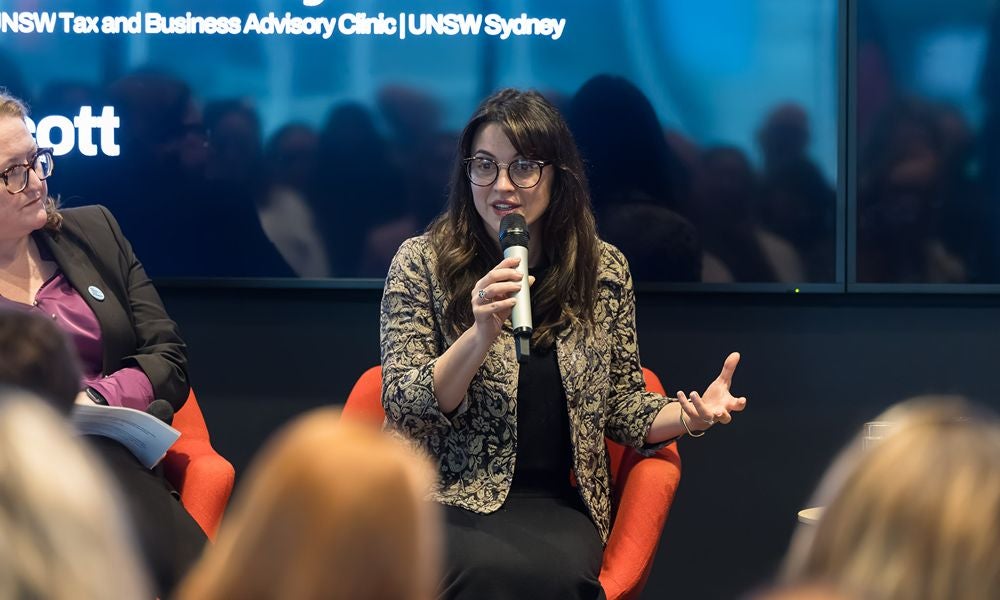
"When it comes to tax, what was surprising was that as long as you have a family business where there is opportunity for joint and several liability, and in turn the creation of debts through that mechanism,” Prof. Kayis-Kumar said.
“Then, unfortunately, we found that that is one of the most common ways that perpetrators can create tax debts, saddle the victim-survivor with them, and then these systems that assume good faith, like the tax system, have the tax office chase the victim-survivor. So perpetrators are able to mobilise and weaponise professions and government agencies to deploy them effectively as a further tactic of their abuse."
She said any business with frontline contact with the public would deal with women in this situation and cited ABS data, which found that 16 per cent of Australian women (about one in six) had experienced economic abuse by a partner since the age of 15. "That is an unacceptably high number," she said, adding that the figure was likely an underestimate.
Women in Super chief executive Jo Kowalczyk said the ABS figures dated from around 2021, when the pandemic gave perpetrators another opportunity. "We know that thousands of women were forced to take their super out during COVID. So those stats, I think, are woefully underestimated."
Learn more: One size doesn't fit all: Is the super system failing vulnerable members?
Prof. Kayis-Kumar said the accounting profession was among the top three professions perpetrators used, according to research examining a parliamentary joint committee inquiry into financial abuse. Prof. Kayis-Kumar noted that her team had trained more than 7000 tax and accounting professionals to identify red flags.
She said financial abuse was about controlling access to money, and the warning signs she identified with UNSW's Professor Jan Breckenridge included a lack of transparency in decision-making and business structures, and a victim-survivor having no access to an account (even a joint one).
The Australian Taxation Office adopted a vulnerability framework that her team co-designed, which was released in October 2025, and she said frontline staff were now being trained at scale. "Raising awareness is a really key step. Frontline support that is trauma-informed is a really key step. And these are manageable bite sizes to get us to collectively, as a whole, respond to this really insidious problem," Prof. Kayis-Kumar said.
CareSuper’s Ms Scott echoed Prof. Kayis-Kumar’s perspective: "We're hoping to be able to explore a partnership with UNSW based on the research that they're doing to develop a really strong evidence base for us to identify where and when vulnerable members are at risk of being abused in the system," she said. "Having a framework and being able to engage with the tax office, with our regulators, to ensure that they're comfortable with the actions that we're taking to both use the evidence to identify risk points for members, and then what we do about that once we identify members at risk."
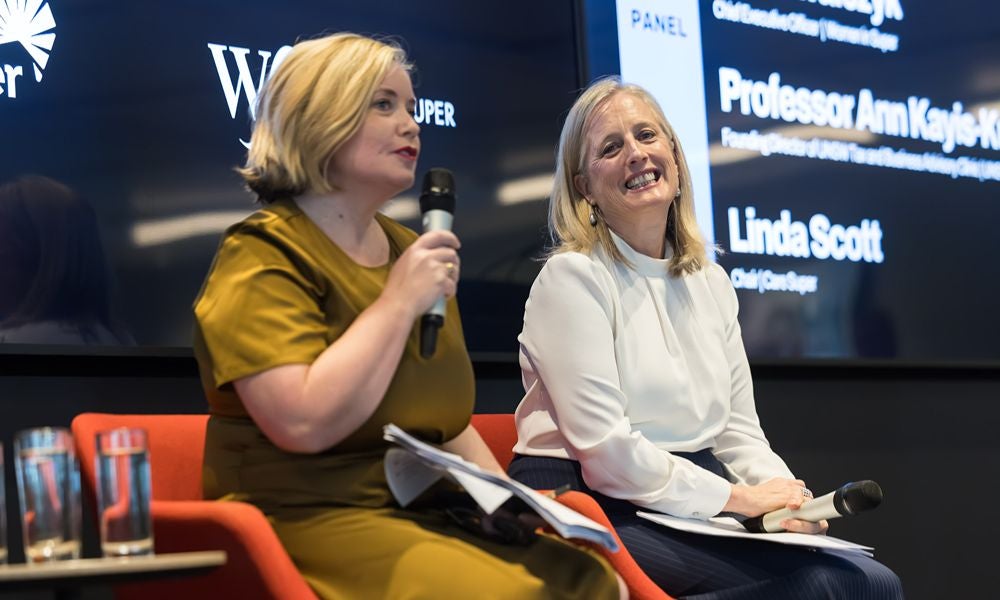
Gender pay gap and unpaid care
Senator Gallagher said Australia's gender equality ranking had risen from 43rd in the world when Labor came to government to eighth, the gender pay gap was at the lowest rate on record, and women's workforce participation had reached a record last year. "So on all of those measures, and we do track them, we are pushing in the right direction," she said, adding there was still a lot more work to do.
Women in Super’s Ms Kowalczyk also noted that “the moral case has been made over many, many years, but I think the economic case is just as compelling, and it's getting more and more difficult to ignore."
She noted that the Workplace Gender Equality Agency, Diversity Council Australia and KPMG were among the organisations that had reached the same conclusion: the gender pay gap costs the economy money. "The stat that I have to check every time I hear it, because it is huge, is we're talking about $1.26 billion a week. That's not an equity statistic. That's a productivity statistic."
Ms Kowalczyk also pointed to a Mercer report that linked flexibility and carer support to productivity gains and found that voluntary staff turnover was at a record low where those supports were in place. "It isn't a trade-off between doing the right thing or doing the profitable thing. The data says they're the same thing. So retention, productivity and closing the gap, they're all going to move us in the same direction," she said.
Subscribe to BusinessThink for the latest research, analysis and insights from UNSW Business School
Ms Kowalczyk said the next priority for Women in Super was the value of unpaid care. The super system set contributions as a percentage of income, so people who stepped back from paid work to raise children or care for family had no mechanism to have that work recognised in their retirement savings.
"It's not that carers have been excluded because of some oversight. It's actually a structural gap within the design of the system itself, and until we close that gap, no amount of tinkering around that is going to mean that women are going to retire into security and safety," she said.
Women in Super had been working this year with four of its member funds and academics to develop a model of care credits, which would translate the value of unpaid care into a retirement savings contribution.
"Obviously, the other part of that is employers of all shapes and sizes, and the importance that we see in needing to reframe the way that employers look at employees' caring responsibilities, and shifting that from an inconvenience that needs to be worked around into a recognition that that care is actually what makes the paid economy work," she said. “It's that unpaid care that is the foundation that allows people to participate in the workforce.”
Government data sharing
Audience member IFM Investors chair Cath Bowtell asked the panel about sharing more data between government services, super funds and, potentially, consumers' banks. She said the payday super reforms, which brought together data from employers, the tax office and super funds, showed the value of combining data, and that more sharing could lift the performance of people's retirement savings through defaults in retirement.
"There's so much untapped potential in the system that is lost because we're relying on individuals to make decisions, and the system is actually one of defaults," Bowtell said.
Senator Gallagher, who is responsible for data across government, said the Data Availability and Transparency Act had just been reviewed. No information had been shared under it, she said, and the Act was due to sunset in April 2027. "I'm very pro-open access, but there are massive data sets that we would never share, and we should never, ever share them," she said. “But we should be clear about what they are and why.”
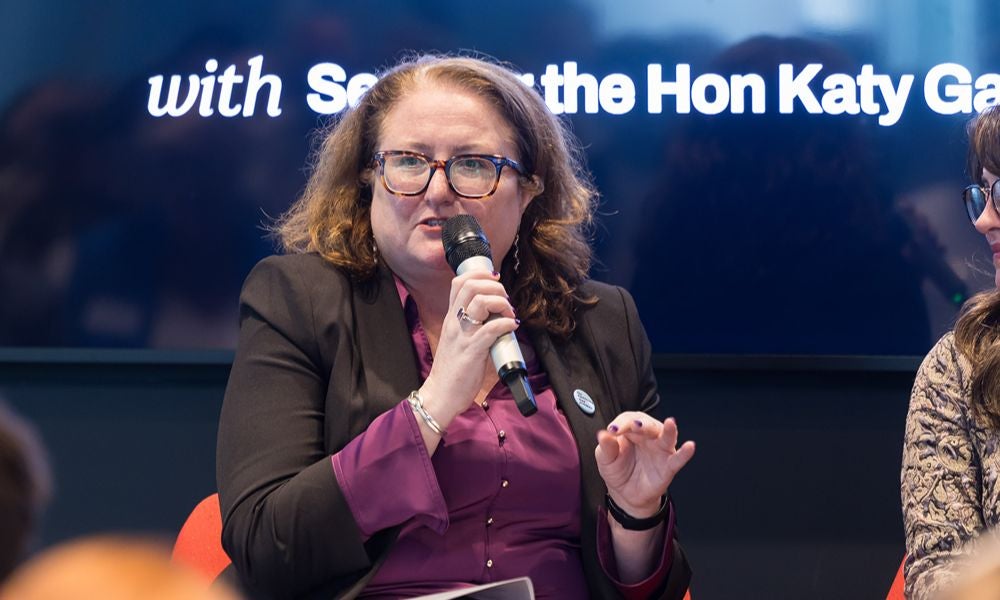
The government was also reviewing legislation to allow a "tell us once" approach, under which agencies such as Centrelink and Medicare could share the information they held on individuals. "Someone's 'tell us once' is another person's privacy breach," Senator Gallagher said.
Ms Scott said super funds had opportunities every couple of months to reunite Australians with their own super. "When we can't do that because we don't have enough data that the government might hold, that's a missed opportunity for wealth creation, not just for that member but for the whole system," she said.
Five recommendations for industry professionals
- Employers and HR leaders: Check that leave policies, superannuation payments and care support do not penalise time spent caring.
- Super funds and trustees: Train frontline staff to identify financial abuse, respond to vulnerability and support members with lost super.
- Tax and accounting professionals: Check consent, business structures, joint liabilities and unexplained tax debts for signs of financial abuse.
- Board directors and chairs: Review gender diversity, appointment processes and paid leadership roles against measurable targets.
- Data and policy leaders: Define data-sharing permissions, privacy controls and member safeguards before linking government, fund or banking data.
UNSW's Progress Partners initiative connects organisations with UNSW expertise and cross-sector networks to tackle complex societal, economic and industry challenges – the first of which is reducing financial abuse in Australia. Progress Partners initiatives are supported by UNSW's Centre for Social Impact and form part of the UNSW Progress for All Strategy.