

Why home ownership is changing how Australians build wealth
Download The Business Of podcast on your favourite podcast platform.
UNSW Sydney's Richard Holden explains why decades of tax and banking policy priced young Australians out of homeownership, and what could still close the gap
In decades past, the path to success for most Australians was pretty linear: get an education, find a job, work your way up, buy a house, and build a life from there.
But the prospect of buying a house has become more challenging in recent years – a fact attested to by 2022 Census data compiled by the Australian Bureau of Statistics. It found that 55% of Millennials (25–39-year-olds) are homeowners compared with 62% of Generation X and 66% of Baby Boomers when they were the same age. Analysis of Census data from 1991, 2006 and 2021 showed that home ownership, including homes owned outright or with a mortgage, for those aged between 25 and 39 years has decreased in each successive generation.
Rising housing costs have created substantial difficulties for young Australians, according to UNSW’s Richard Holden, Vice-Chancellor’s Professor and Chief Societal Economist, who has spent years tracing what happens when homeownership starts to feel more like a myth and not a dream (let alone a reality).
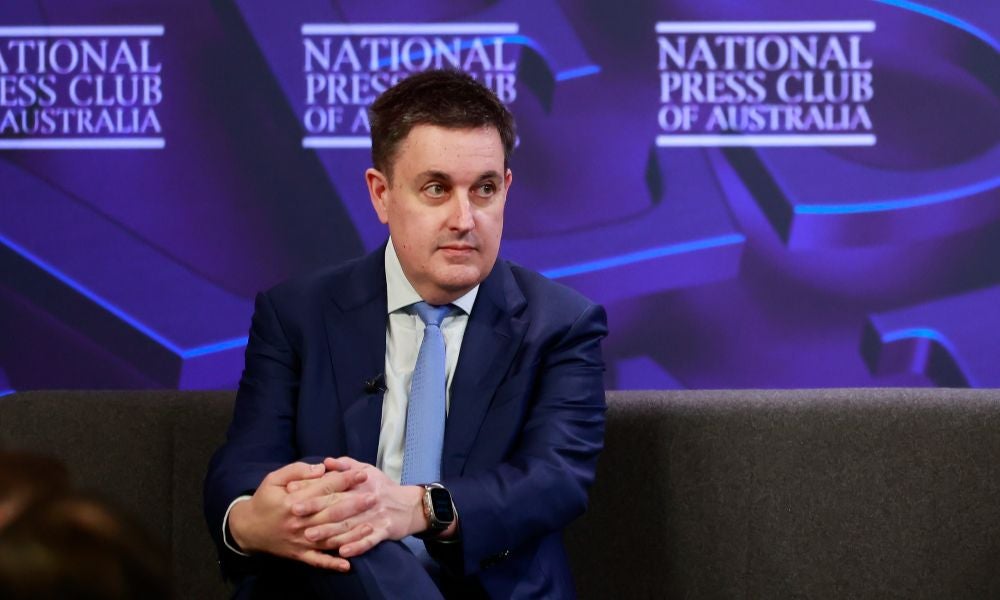
“If people think that they’re never going to own a home, never going to be able to build wealth, it’s a very human, natural reaction to say, 'Well, I may as well enjoy myself,'” said Prof. Holden, who was recently interviewed by Dr Juliet Bourke, Adjunct Professor in the School of Management and Governance for The Business Of, a UNSW Business School podcast.
The intergenerational consequences of this are significant: “They don’t invest, forget about financial investments, all kinds of investments in themselves, their communities and the country that they don’t make, if they feel that they’re locked out of the future,” he observed. “And we need to be really concerned about that.”
Are young Australians actually worse off than their parents?
While lifetime consumption measures do not show younger Australians are falling behind their parents’ generation, Prof. Holden said one important variable has changed: timing. People study longer, settle down later and live longer, so comparing today’s 25-year-olds with those of three decades ago is not comparing like for like.
So the feeling of falling behind in life is a very real one for many. “I understand why young people feel that way, and I think the major driver behind that is the unaffordability of the housing market, particularly in major capital cities in Australia,” said Prof. Holden.
Learn more: Alan Kohler: market distortions are fuelling Australia’s housing crisis
The fact that homes have become unaffordable for many is compounded by the perception that young Australians are falling behind where their parents were at the same age. “That double whammy makes people understandably feel how they do,” he said.
From bank deregulation to a capital gains tax myth
House prices have climbed much faster than incomes over the past few decades, according to Prof. Holden. He traced this back to the 1980s, when former Prime Minister Paul Keating’s deregulation of banking opened Australian banks to competition, while the Basel capital accords allowed banks to hold less capital against home loans and lend more.
From the mid-1990s, central banks (including the Reserve Bank of Australia) gained formal independence and targeted inflation, pushing rates down by up to four percentage points and roughly doubling how much people could borrow.
"The whole dinner party conversation was about one person renovating their bathroom and the other person putting in a pool"
RICHARD HOLDEN
Much of that borrowing flowed into housing, partly because owner-occupied homes attract no capital gains tax, which feeds a popular theory: Did Peter Costello’s 1999 change to capital gains tax cause the affordability crisis? Prof. Holden remains sceptical.
“It never applied to owner-occupied housing in the first place; that was always capital gains tax-free,” he said. “And there are all these other really major changes to the banking system going on in the exact same time period.” Prices began rising 15 years earlier, and he pointed to modelling that puts the change’s impact at only around 2%.
A national obsession with bricks and mortar
Prof. Holden, who spent a decade in the United States before returning to Australia in 2011, recalled many everyday conversations revolved around home ownership, property value and renovations. “The whole dinner party conversation was about one person renovating their bathroom and the other person putting in a pool. And, for one reason or another, we’re completely obsessed with it,” he said.
He also recalled how Saturday newspapers ran a property section that took up half the back pages, one television show in four focused on property renovation, and programs such as The Block turned home improvement into a national pastime. Prof. Holden suggested that some of this comes down to the herd instinct: once everyone else is caught up in it, holding back starts to feel like missing out.

He also pointed to a harder incentive built into the tax system itself, one that rewards parking money in a house above almost anything else. “Because it’s not taxed at all, the family home, there is a real incentive for people to say, ‘Look, I pay quite a lot of tax on my income, I pay a reasonable amount of tax on capital gains, where can I find a way to pay no tax without breaking the rules or without doing something risky?’ Well, that’s a way to do it,” he affirmed. “Just stick it in the family home.”
The economic cost of mortgage-heavy living
If homeowners are using most (if not all) of their income to pay off a mortgage, Prof. Holden said there can be little left for anything else. Such financial positions are made more challenging when homeowners run a small business (such as a restaurant) with additional overheads, while potential customers also have less disposable income.
Housing also carries an appeal few other assets can match, he added: “You get to consume it as well.” As such, there is less appetite to invest anywhere else. Renting rarely inspires the same commitment, he argued, precisely because there is so little at stake in a home you do not own (and which usually goes towards paying someone else’s mortgage).
Learn more: How does Australia’s growing population impact housing supply?
Rental properties are “probably not quite as nice in the first place, and that’s understandable”, he said. “You probably don’t want to make a lot of modifications; you’re not going to put in a new oven that you can’t take with you as a renter. It’s often quite short-term – maybe a year or two years if you’re lucky – for that kind of lease,” he said. “It doesn’t have the same feeling to it, the same sense of home or investment.”
Could renting for life become the norm?
While long-term renting is a less appetising prospect in Australia, Prof. Holden pointed to other countries where it is common. “Germany is a really good example where it’s completely normal, and people actually do put in their own ovens and take them with them when they move,” he said. New York is another market where renting is common, due to the sheer difficulty of owning property there.
Build-to-rent schemes have grown here too, though tax settings have favoured mum-and-dad landlords over institutional investors. However, that balance may shift: from 12 May 2026, the 2026-27 federal budget confirmed negative gearing will be limited to new builds from 1 July 2027, with existing arrangements grandfathered. Prof. Holden examined this reform and why residential property had become such an outlier asset class: “That’s where you hear these stories about people on $120,000 a year with three investment properties,” he said. “You kind of scratch your head about how that’s even possible.”
"What I’d say is, invest in yourself, invest in your own skills"
RICHARD HOLDEN
Whether households will embrace long-term renting is another matter. “I think it’s entirely plausible,” he observed. “The thing that’s tricky for most people is that if (and when) you retire, feeling like you’re still paying rent rather than having paid down a mortgage... feels hard for a lot of people.” The comparison is often skewed, as he said that rent might be roughly 3% of a property’s value, while mortgage interest alone can be above 6%.
Wealthy on paper: does inherited wealth deepen the divide?
Prof. Holden pointed to other financial strains that come with homeownership. Asset-rich, cash-poor households, for example, might have paid down an expensive home – but built little else in savings. As such, there is often a case for downsizing once children have left the family home. And many wealthy workers channel so much of their income into a tax-free family home that Prof. Holden said there is little left to enjoy.
Dr Bourke asked whether the transfer of wealth between generations widens the gap. Prof. Holden pointed to Australia’s tax settings as part of the problem for those starting from nothing. “The 40% marginal tax rate kicks in at less than two times full-time earnings,” he said. “There are many other jurisdictions where that number is more like 10 times – or even higher multiples of earnings.” The bigger risk, in his view, is what happens to motivation once people conclude they will never get ahead, which contributes to the aforementioned intergenerational investment risk.
What the budget actually offered younger generations
Prof. Holden was bluntly unenthusiastic about the 2026 Federal Budget. Most of its generational measures amounted to what he called “boomer bashing”, rather than anything meaningful for younger Australians.
He did credit the Prime Minister for describing the negative gearing reform clearly on the campaign trail, telling voters that first-time buyers at auction would no longer be “outgunned” by investors. That was exactly the levelling of the playing field between owner-occupiers and investors that Prof. Holden’s own recommendations (first proposed in his 2015 McKell Institute report) were designed to achieve.
He was less convinced by the economic logic behind other policies, such as the Working Australian Tax Offset (WATO) – a $250-a-year credit for roughly 13 million working Australians, available only against wage income. “That’s what’s in this budget for Millennials and Gen Z. Five bucks a week? And you might get outbid by another millennial, rather than an investor, at the auction on the weekend,” he observed. “Does this really address that? I don’t think so.”
Lifting people up: building wealth from scratch today
Asked what should be done about the intergenerational wealth divide and the unaffordability of property in particular, Prof. Holden said he would “like to see us focus more on lifting people up than just focusing on the gap. When you focus on the gap, it’s very natural to say, ‘Well, there’s these people up here, and there’s people down here... you can just tax these people a lot.’”
Subscribe for the latest research, analysis and insights from UNSW Business School
For those starting from nothing, Prof. Holden came back to the importance of education. He sees continual reskilling (not property) as the most reliable means employees have left to build financial security. As such, government and industry need to keep investing in technology that lifts productivity, so employers can hire people with the skills they need (and remunerate them accordingly).
“What I’d say is, invest in yourself, invest in your own skills. If you’re more on the entrepreneurial side, invest in having a great idea and putting your energy into building that,” he said. “Those can’t be taken away from you.”